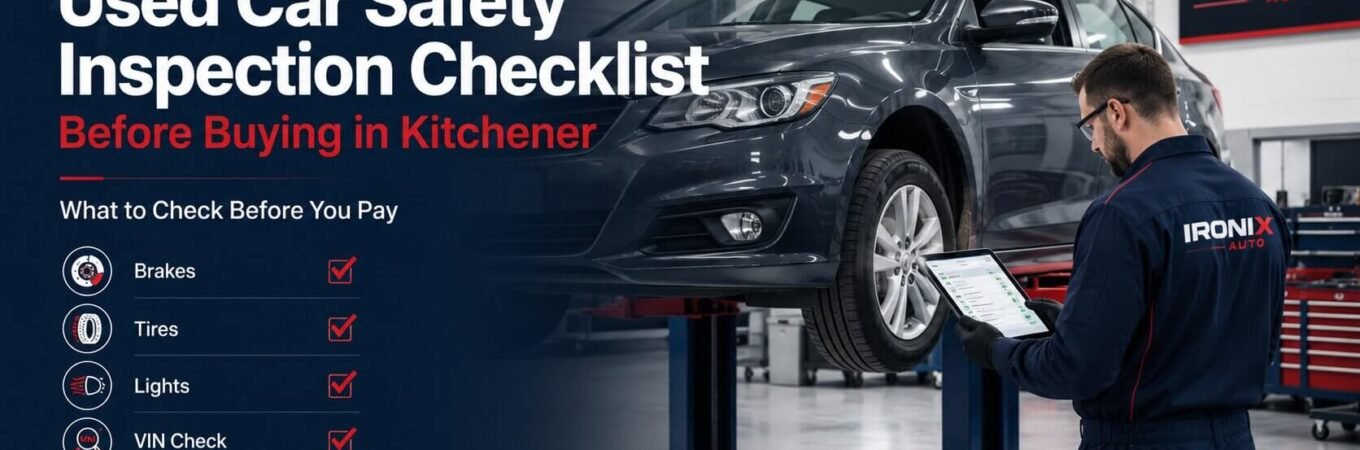
Buying a used car in Kitchener can be a smart decision, especially when you want to save money compared to buying new. But a used vehicle can also come with hidden safety problems, repair costs, accident history, worn components, or registration delays if the paperwork and inspection process are not handled properly.
Whether you are buying from a private seller, dealer, marketplace listing, or someone you know, it is important to inspect the vehicle carefully before making payment. A clean exterior and smooth test drive do not always mean the car is safe, reliable, or ready to pass an Ontario Safety Standards Certificate inspection.
This used car safety inspection checklist is designed to help buyers in Kitchener, Waterloo, Cambridge, Guelph, and nearby areas understand what to check before buying a used vehicle. It also explains why a professional inspection is worth considering before you commit to the purchase.
If you are buying a used car and need a professional safety inspection in Kitchener, Ironix Auto can help you inspect the vehicle properly and understand what may be required before it can be certified.
Why a Used Car Safety Inspection Matters Before Buying
A used car may look good in photos, but the real condition depends on its mechanical, structural, electrical, and safety-related systems. Many problems are not easy for the average buyer to identify during a quick viewing.
A safety inspection helps you avoid expensive surprises such as worn brakes, unsafe tires, suspension issues, steering problems, leaks, rust damage, warning lights, or previous collision repairs.
In Ontario, a Safety Standards Certificate is commonly required when transferring a used vehicle to a new owner, unless an exemption applies. However, buyers should understand one important point: a safety certificate confirms that the vehicle met Ontario’s minimum safety standards at the time of inspection. It is not a warranty, not a full mechanical guarantee, and not a promise that the vehicle will not need repairs later.
That is why a pre-purchase inspection is helpful even if the seller says the vehicle “comes with safety.” A proper inspection before buying can help you decide whether the asking price is fair, whether the car needs repairs, and whether you should move forward, negotiate, or walk away.
Safety Certificate vs. Pre-Purchase Inspection
Many buyers confuse an Ontario Safety Standards Certificate with a pre-purchase inspection. They are related, but they are not exactly the same.
A Safety Standards Certificate inspection focuses on whether the vehicle meets Ontario’s minimum safety standard for registration or transfer purposes. It includes safety-related systems such as brakes, tires, steering, suspension, lighting, seat belts, windshield, body condition, and other required components.
A pre-purchase inspection is broader. It can include the safety-related items plus additional checks such as engine condition, transmission behaviour, fluid leaks, diagnostic trouble codes, service history, visible accident repair, underbody corrosion, test drive performance, and upcoming maintenance concerns.
If you are buying a used car in Kitchener, the best approach is to look at both sides: Can the vehicle meet safety requirements, and is it a good purchase overall?
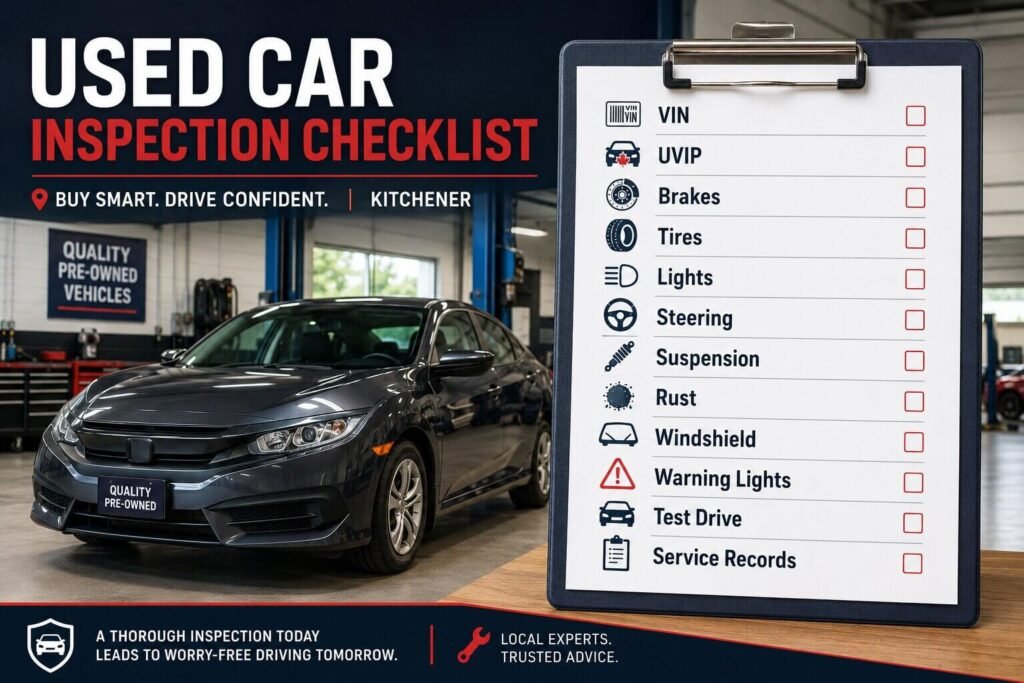
Used Car Safety Inspection Checklist Before Buying
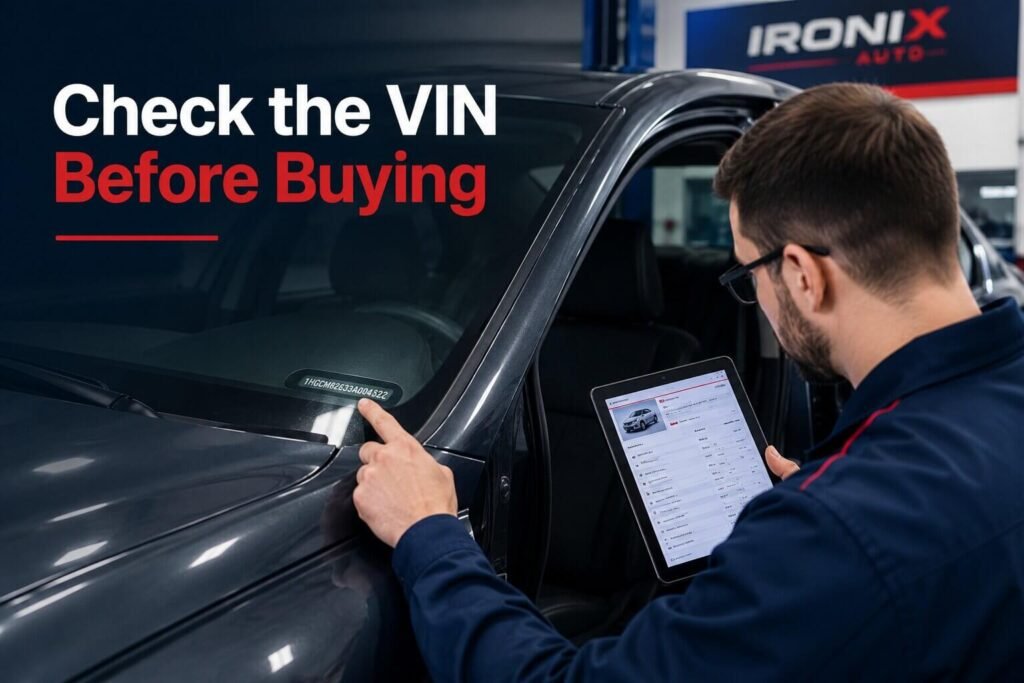
1. Check the Vehicle Identification Number
Before you inspect the car mechanically, confirm the Vehicle Identification Number, also called the VIN. The VIN is usually visible at the lower corner of the windshield on the driver’s side and may also appear on the driver door jamb, ownership permit, insurance documents, and vehicle history reports.
Make sure the VIN on the vehicle matches the VIN on the ownership documents and any vehicle history report. If the numbers do not match, stop the process and ask questions. A mismatch can indicate paperwork issues, clerical errors, stolen vehicle concerns, or more serious title problems.
You should also use the VIN to check for open recalls through official manufacturer resources or Transport Canada recall information. Safety recalls can involve serious defects, including airbags, brakes, steering, electrical systems, seat belts, or other safety-related parts.
2. Ask for the Used Vehicle Information Package
In Ontario private sales, the seller is legally required to provide a Used Vehicle Information Package, commonly called a UVIP. This package can include important information about the vehicle, such as registration history, lien information, vehicle details, and other sale-related information.
As a buyer, do not treat the UVIP as a small formality. Review it carefully before paying for the vehicle. Look for lien information, ownership details, vehicle description, and whether the information matches what the seller has told you.
If there is a lien on the vehicle, the lender may still have a financial interest in it. This can become a serious problem for the buyer if not resolved before purchase.
3. Review the Vehicle History
A vehicle history report can help you understand whether the car has been in reported accidents, had insurance claims, changed ownership many times, or has mileage records that appear inconsistent.
A history report does not replace a physical inspection, but it can reveal issues that should make you ask more questions. For example, a vehicle may look clean but have a history of collision repair. A professional inspection can then look for signs of structural repair, mismatched paint, panel gaps, poor bodywork, or underbody damage.
When buying a used vehicle, compare the history report, UVIP, seller’s story, service records, and physical condition. If they do not match, proceed carefully.
4. Inspect the Exterior Body
Walk around the vehicle slowly in daylight. Avoid inspecting a used car at night or in poor lighting because dents, scratches, rust, paint mismatch, and body repairs are easier to hide.
Check for:
- Rust around wheel arches, rocker panels, doors, trunk, hood, and underbody edges
- Uneven panel gaps
- Paint colour differences between panels
- Overspray around trim, rubber seals, or lights
- Cracked bumpers or loose panels
- Signs of previous collision repair
- Dents, scratches, or poorly aligned doors
- Water inside lights or damaged lenses
In Kitchener and the wider Waterloo Region, winter road salt can contribute to corrosion over time. Surface rust may be manageable, but structural rust can become a safety issue and may affect whether a vehicle can pass inspection.
5. Check the Windshield, Windows, and Mirrors
Visibility is a safety issue. Check the windshield carefully for cracks, stone chips, and damage in the driver’s viewing area. Also inspect side windows, rear glass, and mirrors.
Test the power windows and make sure they move smoothly. Check that mirrors are secure and adjustable. Damaged glass, broken mirrors, or poor visibility can become safety concerns and may need repair before certification.
Also check windshield wipers and washer spray. Wipers should clear the windshield properly without streaking, skipping, or leaving large unwiped areas.
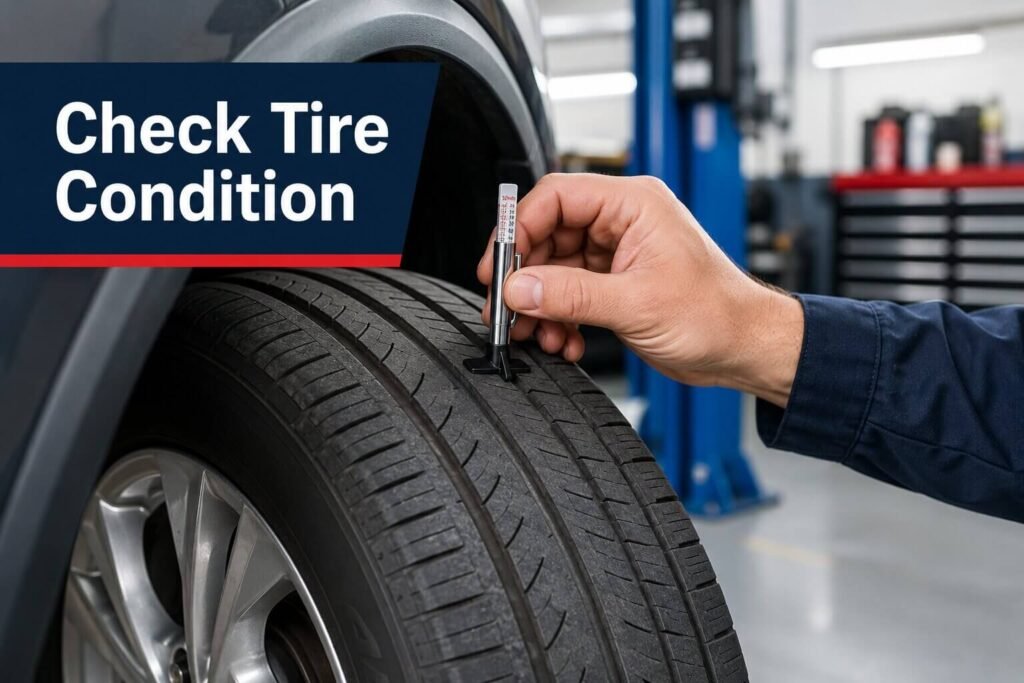
6. Inspect Tires and Wheels
Tires tell you a lot about a used vehicle. Uneven tire wear can point to alignment problems, suspension wear, poor maintenance, or previous damage.
Check:
- Tread depth
- Cracks or bulges in sidewalls
- Uneven wear on inner or outer edges
- Mismatched tire sizes
- Age of tires
- Winter or all-season suitability
- Wheel damage
- Missing or damaged lug nuts
If the vehicle comes with extra tires, inspect those too. A seller may mention “winter tires included,” but those tires may be too worn, old, cracked, or unsafe.
Tires can be expensive to replace, so their condition should be part of your negotiation before buying.
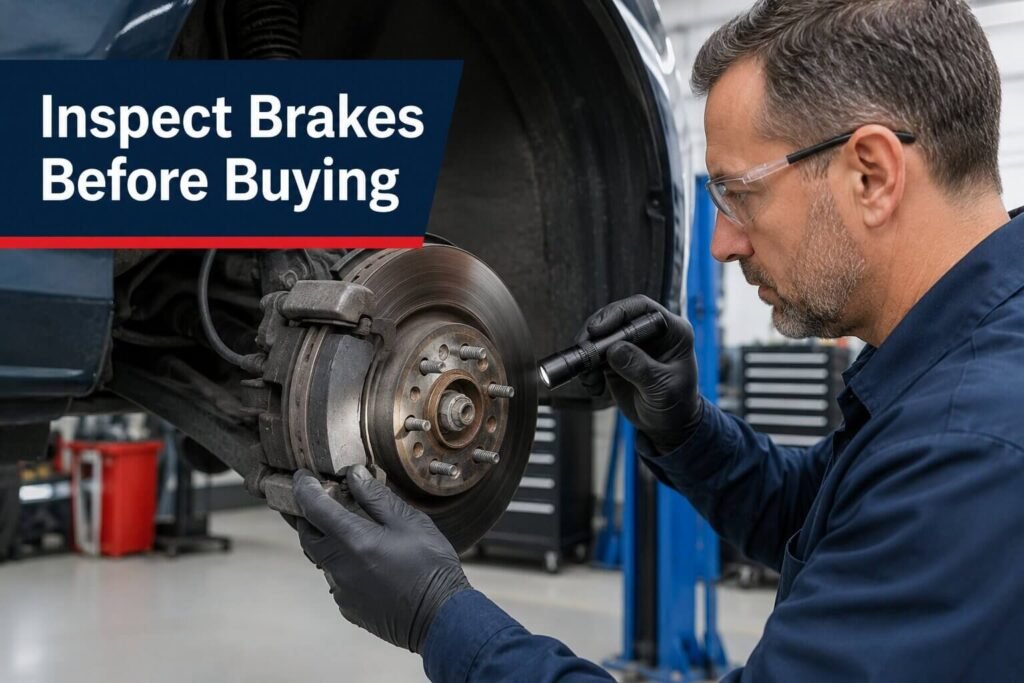
7. Check Brakes
Brake condition is one of the most important parts of a used car safety inspection. During a visual check, look through the wheel openings if possible. Check whether the brake rotors look heavily rusted, grooved, or uneven. During the test drive, listen and feel for brake problems.
Warning signs include:
- Grinding noise
- Squealing noise
- Brake pedal vibration
- Vehicle pulling to one side while braking
- Soft or sinking brake pedal
- Burning smell after driving
- Parking brake not holding properly
Brake repairs can range from basic pad and rotor replacement to more serious issues involving calipers, brake lines, hoses, drums, or hydraulic leaks. If you notice brake symptoms, get the vehicle inspected before buying.
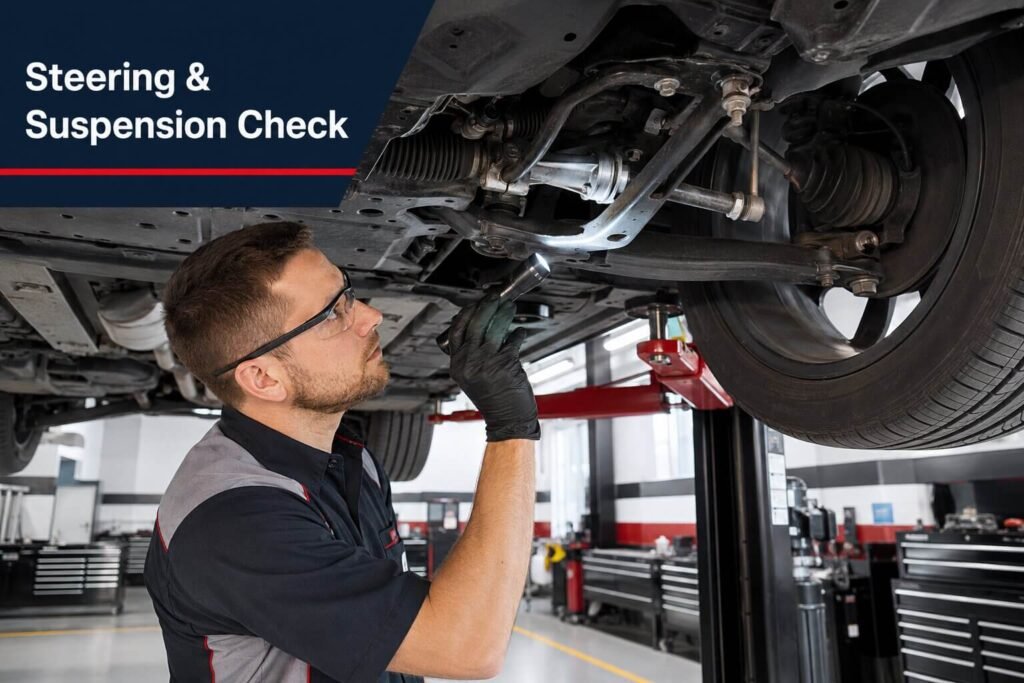
8. Inspect Steering and Suspension
Steering and suspension problems can affect handling, tire wear, braking stability, and road safety.
During the test drive, pay attention to:
- Clunking over bumps
- Loose steering feel
- Vehicle pulling left or right
- Steering wheel vibration
- Uneven ride height
- Bouncing after bumps
- Knocking during turns
- Poor stability at highway speed
A professional inspection can check components such as ball joints, tie rods, control arms, bushings, shocks, struts, wheel bearings, and other suspension parts.
These repairs can be costly, so do not ignore unusual noises or poor handling.
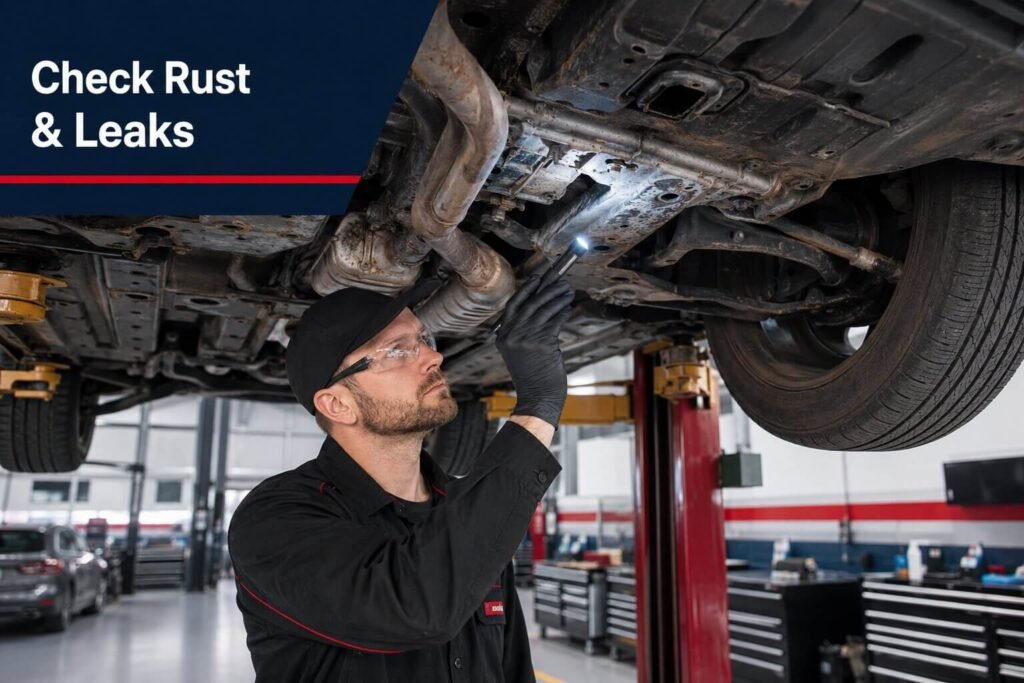
9. Look Under the Vehicle
If possible, look under the vehicle before buying. You do not need to be a mechanic to notice obvious warning signs.
Look for:
- Fluid leaks
- Heavy rust
- Damaged exhaust parts
- Hanging shields or loose components
- Bent suspension parts
- Oil around the engine or transmission area
- Coolant leaks
- Brake fluid leaks
- Fuel smell
A small amount of surface rust may be normal on older Ontario vehicles, but severe corrosion, holes, broken mounts, leaking lines, or unsafe structural areas are serious concerns.
Because many underbody problems are difficult to inspect without a lift, this is one of the biggest reasons to book a professional inspection before purchase.
10. Check Lights and Electrical Items
Lighting is a basic safety requirement, but many used cars have simple electrical issues that buyers miss.
Check:
- Headlights
- High beams
- Brake lights
- Reverse lights
- Turn signals
- Hazard lights
- Licence plate lights
- Fog lights if equipped
- Interior lights
- Dashboard illumination
Ask another person to stand outside the car while you test the lights. Also check the horn, power locks, power mirrors, heater, air conditioning, defroster, radio, backup camera, sensors, and charging ports.
Electrical issues can be simple or complex. A burned bulb is minor, but wiring problems, warning lights, or malfunctioning safety systems can become more expensive.
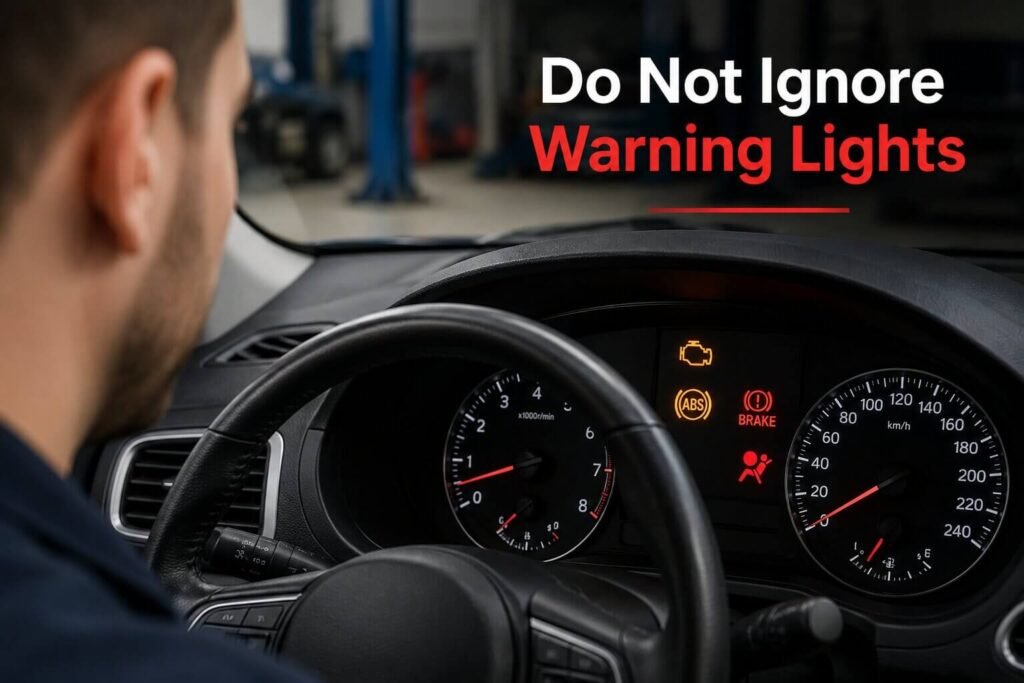
11. Check Dashboard Warning Lights
When you first turn the key or press the start button, warning lights should come on briefly and then go out after the engine starts. Pay attention to lights that stay on.
Important warning lights include:
- Check engine light
- ABS warning light
- Airbag or SRS warning light
- Traction control or stability control warning
- Brake warning light
- Oil pressure warning
- Battery warning
- Tire pressure warning
Do not accept simple explanations such as “it’s just a sensor” without verification. Some warning lights may point to serious safety or emissions-related problems. A diagnostic scan can help identify stored codes, but codes should always be interpreted by a qualified technician.
12. Inspect the Interior and Seat Belts
The interior condition can reveal how the vehicle was treated. Check the seats, carpets, headliner, controls, and odour.
Look for:
- Water stains
- Mold smell
- Excessive wear
- Broken seat adjustment
- Damaged seat belts
- Airbag covers that look disturbed
- Missing trim
- Signs of smoking or water damage
Seat belts should extend, retract, latch, and release properly. Damaged or non-working seat belts are a safety concern.
Also check that the odometer reading appears reasonable based on the condition of the pedals, steering wheel, seats, and service records.
13. Check Engine Bay Condition
Open the hood and look carefully. You do not need to diagnose every component, but you can still spot warning signs.
Check for:
- Oil leaks
- Coolant leaks
- Cracked belts
- Corrosion on battery terminals
- Low fluid levels
- Burnt smell
- Loose hoses
- Aftermarket wiring
- Signs of overheating
- Milky oil residue under the oil cap
Start the engine from cold if possible. Listen for knocking, ticking, rough idle, rattling, or excessive vibration. Check the exhaust smoke. Blue smoke can indicate oil burning, white smoke after warm-up may indicate coolant-related issues, and black smoke may suggest fuel mixture problems.
A clean engine bay is not always proof of good condition. Sometimes sellers clean the engine to hide leaks, so look carefully after the test drive too.
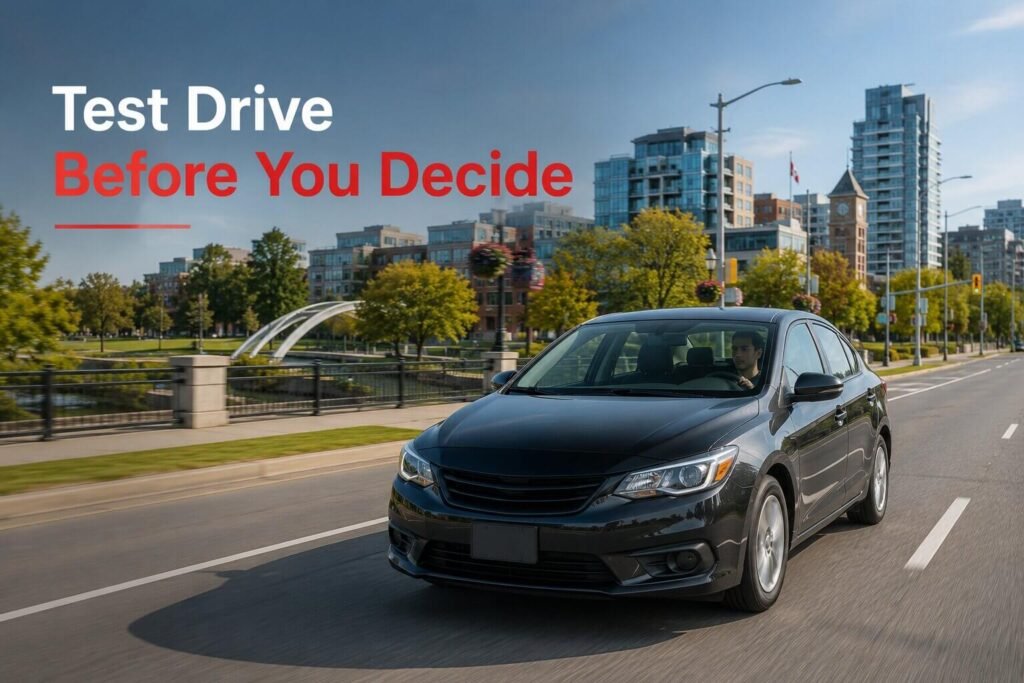
14. Test Drive the Vehicle Properly
A short drive around the block is not enough. If the seller allows it and the vehicle is legal to drive, test it at different speeds and road conditions.
During the test drive, check:
- Smooth engine acceleration
- Transmission shifting
- Brake performance
- Steering response
- Suspension noise
- Highway stability
- Engine temperature
- Warning lights
- Unusual smells
- Vibrations
- Parking brake operation
Drive over small bumps, turn left and right, brake firmly in a safe area, and listen carefully. If the seller refuses a reasonable test drive or inspection, treat that as a warning sign.
15. Check Service Records and Maintenance History
Ask for maintenance records. A well-maintained vehicle should have evidence of oil changes, brake work, tire replacement, battery replacement, transmission service, coolant service, or other repairs.
Missing records do not automatically mean the car is bad, but they increase uncertainty. If there are no records, budget for a more careful inspection.
Also ask whether the vehicle has had recent repairs. Recent repairs can be positive, but they should be supported by invoices. If a seller says “everything was just done” but cannot show any proof, verify it before trusting the claim.
16. Be Careful With “As-Is” Used Cars
In Ontario, used vehicles may be sold “as-is.” This usually means the buyer is accepting the vehicle in its current condition, and the seller is not promising that it will pass safety or be road-ready.
An “as-is” vehicle can sometimes be a good deal for a buyer who understands repairs, but it can also become expensive quickly. Before buying an as-is car, get an inspection and estimate the cost to make it safe and certifiable.
Do not assume a cheap as-is vehicle will only need small repairs. It may need brakes, tires, suspension, steering, exhaust, windshield, lights, rust repair, or more.
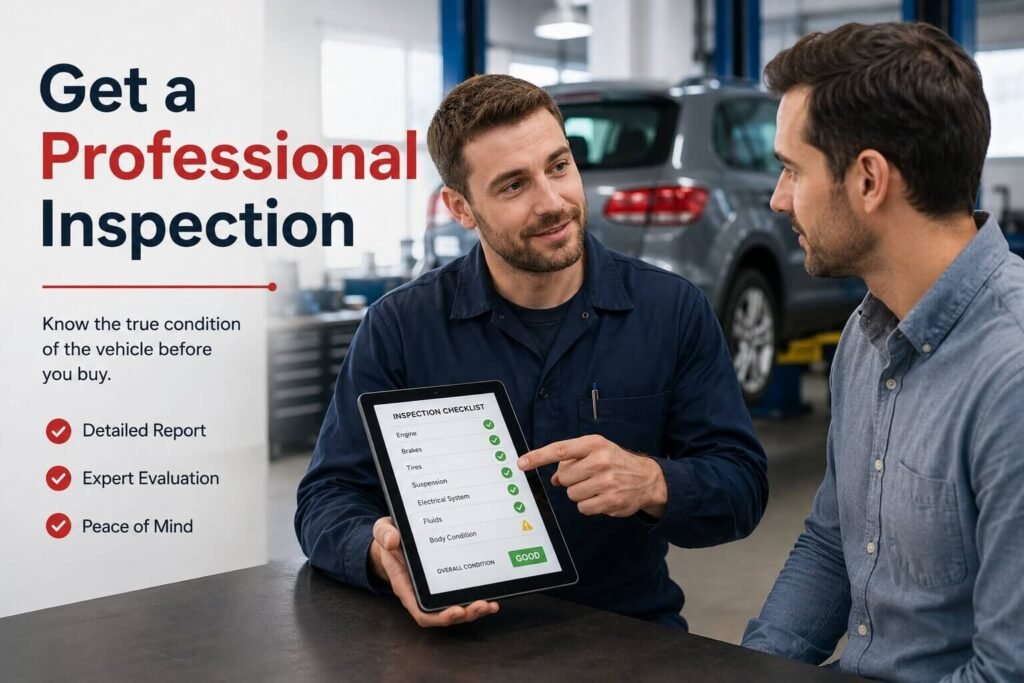
When Should You Book a Professional Inspection?
You should book a professional used car inspection before buying if:
- You are buying from a private seller
- The vehicle is older or high-mileage
- The price seems too good to be true
- The seller cannot provide service records
- There are warning lights on the dashboard
- You notice noises, leaks, rust, or brake issues
- The vehicle is being sold as-is
- You are not confident inspecting cars yourself
- You need the vehicle to pass Ontario safety inspection
A professional inspection gives you a clearer understanding of the vehicle’s condition before you spend your money.
Used Car Inspection in Kitchener: Why Choose Ironix Auto?
Ironix Auto helps drivers in Kitchener and nearby areas with automotive inspections, safety certificate inspections, and repair services. If you are planning to buy a used vehicle, bringing it to a qualified shop before purchase can help you make a more confident decision.
A proper inspection can help identify safety-related concerns, upcoming repair needs, and issues that may affect whether the vehicle can pass Ontario safety standards.
Ironix Auto is located at:
Ironix Auto
1659 Victoria St N Unit 3
Kitchener, ON N2B 3E6
Phone: +1 519-744-8000
If you are buying a used car in Kitchener, Waterloo, Cambridge, or nearby areas, book a used car safety inspection before finalizing the deal.
Final Checklist Before You Pay
Before handing over money, make sure you have reviewed:
- VIN match
- UVIP
- Ownership documents
- Vehicle history
- Recall status
- Exterior condition
- Rust and underbody condition
- Tires and wheels
- Brakes
- Steering and suspension
- Lights and signals
- Windshield and wipers
- Dashboard warning lights
- Engine bay
- Test drive performance
- Service records
- Professional inspection report
Buying a used car should not be rushed. Taking time to inspect the vehicle before purchase can protect you from expensive repairs, registration delays, and safety risks.
A used vehicle may look clean, but the real value is in its condition. When in doubt, have it inspected by a professional before you buy.
Need a used car safety inspection in Kitchener? Book your inspection with Ironix Auto today.
FAQs
Do I need a safety certificate before buying a used car in Ontario?
A safety certificate is commonly required to register a used vehicle as fit after transfer, unless an exemption applies. As a buyer, you should confirm whether the vehicle already has a valid certificate or whether you will need to get one after purchase.
Is a Safety Standards Certificate the same as a full used car inspection?
No. A safety certificate inspection confirms whether the vehicle meets Ontario’s minimum safety standards at the time of inspection. A full pre-purchase inspection can also look at broader mechanical condition, maintenance concerns, leaks, diagnostic codes, and potential future repair costs.
Should I buy a used car without getting it inspected?
It is risky, especially in a private sale or as-is sale. A professional inspection can help identify safety issues, repair costs, and hidden problems before you commit.
What are common used car problems in Ontario?
Common issues include worn brakes, unsafe tires, suspension wear, steering problems, rust, exhaust leaks, windshield damage, warning lights, and fluid leaks. Ontario winter road salt can also contribute to corrosion over time.
Can Ironix Auto inspect a used car before I buy it?
Yes. If you are buying a used car in Kitchener or nearby areas, you can contact Ironix Auto to book a professional inspection and understand the vehicle’s condition before purchase.