If you are buying, selling, registering, or transferring a vehicle in Ontario, you may need a Safety Standards Certificate. One of the most common questions drivers ask is: what is actually checked during a vehicle safety inspection in Ontario?
A safety inspection is not just a quick look at the car. It is a structured inspection based on Ontario’s vehicle safety requirements. For passenger and light-duty vehicles, the inspection follows Ontario’s Passenger/Light-Duty Vehicle Inspection Standard. The goal is to confirm that the vehicle meets the minimum required safety standard at the time of inspection.
This article explains the major items checked during an Ontario vehicle safety inspection, including brakes, tires, steering, suspension, lights, windshield, exhaust, seat belts, structure, powertrain, electrical components, and road test items.
It is important to understand that a Safety Standards Certificate is not a warranty and not a guarantee that the vehicle will stay problem-free after inspection. It confirms that the vehicle met Ontario’s required safety standard when inspected.
If you need a professional inspection locally, book a DriveON safety inspection in Kitchener with Ironix Auto.
What Is an Ontario Vehicle Safety Inspection?
An Ontario vehicle safety inspection is a formal inspection used to determine whether a vehicle meets the province’s minimum safety standard. When a vehicle passes, a Safety Standards Certificate may be issued.
This certificate is commonly needed when:
- A used vehicle is transferred to a new owner
- A vehicle is registered in Ontario from another province, territory, or country
- A rebuilt vehicle is registered
- A vehicle’s status is changed from unfit to fit
The inspection is completed by an authorized inspection facility through Ontario’s vehicle inspection system. Ontario has moved to DriveON, a digital inspection program for vehicle safety and emissions inspections.
For the average driver, this means the inspection must be completed properly, documented correctly, and based on the applicable Ontario inspection standard.
What Does the Inspection Prove?
A passed inspection means the vehicle met the required safety standard at the time it was inspected.
It does not mean:
- The vehicle is brand new
- The vehicle is mechanically perfect
- No repairs will be needed in the future
- The vehicle has no wear
- The vehicle has a warranty
- The vehicle has passed a complete pre-purchase mechanical inspection
This distinction is very important. A safety inspection focuses on required safety items. A broader pre-purchase inspection may include additional checks such as engine health, transmission behaviour, diagnostic codes, maintenance history, accident signs, and upcoming repair risks.
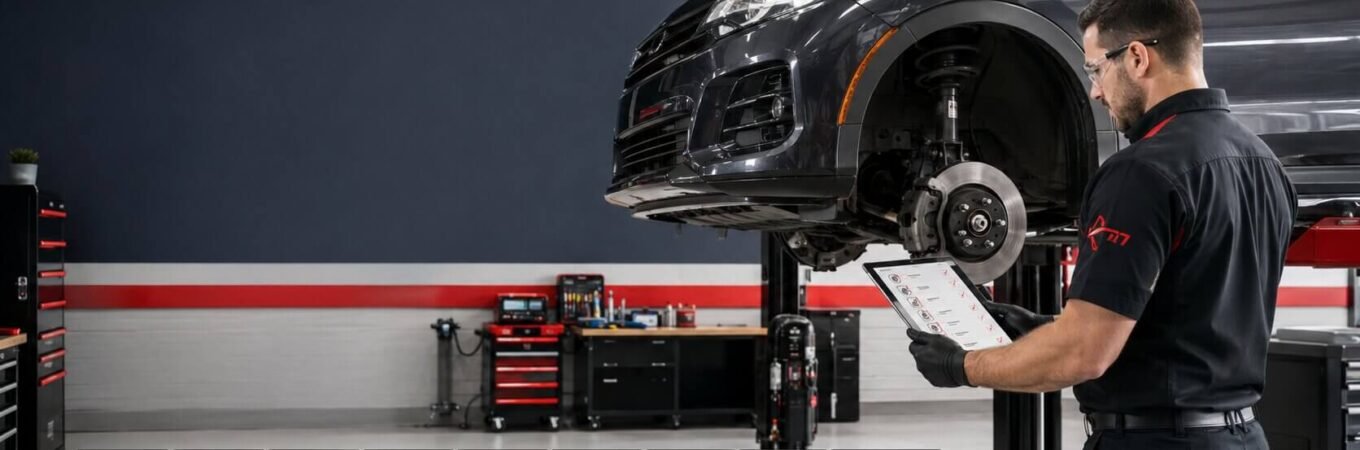
1. Brakes
The brake system is one of the most important parts of an Ontario safety inspection. A vehicle must be able to stop safely and consistently.
During the inspection, a technician may check brake components such as:
- Brake pedal operation
- Brake pads
- Brake rotors
- Brake shoes
- Brake drums
- Brake calipers
- Brake lines
- Brake hoses
- Brake fluid leaks
- Parking brake operation
- Brake warning indicators
- Anti-lock braking system concerns where applicable
A vehicle may fail if brake components are damaged, excessively worn, leaking, insecure, contaminated, missing, or not working correctly.
Common brake-related issues include thin brake pads, heavily rusted rotors, seized calipers, leaking brake lines, damaged hoses, poor pedal feel, or a parking brake that does not hold properly.
For drivers in Ontario, brake line corrosion can be a real concern because winter road salt can contribute to rust over time. This is one reason older used vehicles should be inspected carefully before purchase or registration.
2. Tires and Wheels
Tires are a direct safety item because they affect braking, steering, traction, and stability. During a safety inspection, the technician checks whether the tires and wheels are safe for road use.
The inspection may include:
- Tire tread condition
- Tire damage
- Tire leaks
- Sidewall cracks or bulges
- Tire pressure concerns
- Valve stem condition
- Wheel condition
- Wheel fasteners
- Missing or damaged lug nuts
- Incompatible wheels or components
- Loose or ineffective wheel fasteners
A vehicle may fail if the tires are unsafe, damaged, leaking, incorrectly installed, or not suitable for the vehicle.
Tire condition is especially important when buying a used vehicle. A car may look clean, but if the tires are worn, cracked, or unevenly worn, the buyer may face immediate replacement costs. Uneven tire wear can also point to steering, suspension, or alignment issues.
3. Steering System
The steering system must allow the driver to control the vehicle safely. Any looseness, binding, damaged parts, or unsafe repairs can create serious driving risk.
During inspection, steering-related checks may include:
- Steering wheel condition
- Steering column
- Steering linkage
- Tie rods
- Steering rack or steering box
- Power steering system
- Steering fluid leaks
- Steering response
- Loose or worn components
- Binding during steering movement
A vehicle may fail if steering components are loose, damaged, missing, excessively worn, leaking, insecure, or not functioning as required.
Drivers should pay close attention to symptoms such as steering wheel vibration, pulling to one side, clunking during turns, loose steering feel, or difficulty turning. These issues may indicate steering or suspension problems that need repair before the vehicle can pass.
4. Suspension
Suspension affects comfort, tire contact, braking stability, and vehicle control. In Ontario’s inspection standard, suspension and frame attachments are important safety areas.
A technician may inspect parts such as:
- Springs
- Shocks
- Struts
- Control arms
- Ball joints
- Bushings
- Stabilizer links
- Anti-sway bar components
- Suspension mounts
- Fasteners
- Frame attachment points
- Tire interference with body or frame
A vehicle may fail if suspension components are bent, broken, missing, loose, insecure, excessively worn, repaired improperly, or allowing tire contact with the vehicle body or frame.
Suspension issues are common in used vehicles, especially those driven on rough roads or exposed to winter conditions. Warning signs include knocking sounds over bumps, uneven ride height, bouncing, poor handling, uneven tire wear, or clunking from the front or rear of the vehicle.
5. Lights and Signals
Vehicle lighting is another key safety area. Lights allow the driver to see and allow other road users to see the vehicle’s movements.
The inspection may check:
- Headlights
- High beams
- Brake lights
- Tail lights
- Turn signals
- Hazard lights
- Reverse lights
- Licence plate lights
- Reflectors
- Side marker lights where applicable
- Required lighting location and visibility
- Operation of switches and indicators
A vehicle may fail if required lights are missing, not working, insecure, incorrectly installed, too dim, damaged, or not visible as required.
Before bringing a vehicle for inspection, drivers can do a simple walkaround test. Turn on the lights, use the hazard switch, test brake lights with another person, and check both front and rear signal lamps. Simple bulb issues are usually easier to fix before inspection.
6. Windshield, Wipers, Washers, and Visibility
Visibility is a safety requirement. The driver must be able to see clearly through the windshield and use the wipers and washers when needed.
Inspection items may include:
- Windshield condition
- Cracks or damage affecting visibility
- Wiper operation
- Wiper blade condition
- Washer spray operation
- Defroster or heater function where applicable
- Side windows where applicable
- Mirrors
A vehicle may fail if the windshield is damaged in a way that affects safe visibility, if the wipers do not operate correctly, if the washer system does not work, or if required visibility equipment is missing or defective.
This is especially important in Ontario because rain, snow, slush, and road spray can quickly reduce visibility. Worn wiper blades or a non-working washer system may seem minor, but they can become a serious safety issue in real driving conditions.
7. Exhaust System
The exhaust system must be secure and safe. It helps direct exhaust gases away from the cabin and reduces unsafe exposure to fumes.
A technician may inspect:
- Exhaust pipes
- Muffler
- Hangers
- Mounts
- Leaks
- Insecure parts
- Damaged sections
- Exhaust routing
- Noise concerns where applicable
A vehicle may fail if the exhaust has unsafe leaks, loose components, missing parts, or damage that could allow fumes to enter the passenger area.
Exhaust leaks should never be ignored. Even if the vehicle seems to drive normally, exhaust fumes can be dangerous. If you smell exhaust inside the cabin, hear loud exhaust noise, or see hanging exhaust parts, get the vehicle inspected before continuing regular use.
8. Seat Belts and Occupant Restraints
Seat belts and occupant restraints are critical safety components. They must be present and operate properly.
The inspection may include:
- Seat belt webbing condition
- Latch and buckle operation
- Retractor function
- Mounting points
- Missing or damaged belts
- Warning indicators where applicable
- Airbag or restraint-related warning concerns where applicable
A vehicle may fail if a required seat belt is missing, damaged, frayed, cut, inoperative, insecure, or unable to latch and release properly.
When checking a used vehicle, test every seating position, not just the driver’s seat. Pull each belt out, latch it, release it, and confirm it retracts correctly. A damaged rear seat belt can still affect safety compliance.
9. Body, Frame, and Structure
Body and structural condition are very important in Ontario inspections. A vehicle’s structure must be safe and able to support normal operation.
The inspection may check:
- Body panels
- Frame condition
- Structural corrosion
- Sharp edges
- Loose or insecure body parts
- Fenders
- Bumpers
- Doors
- Hood
- Trunk or hatch
- Floor areas
- Mounting points
- Damage from collision or rust
A vehicle may fail if body sections have hazardous sharp edges, if parts are loose or insecure, if corrosion affects safety, or if structural areas are damaged beyond acceptable limits.
In Kitchener and across Ontario, rust is one of the biggest concerns on older vehicles. Road salt, moisture, age, and poor previous repairs can lead to corrosion. Surface rust does not always mean a vehicle will fail, but structural rust, holes, weakened mounts, damaged frame areas, or unsafe body condition can become serious issues.
For used car buyers, an underbody inspection on a lift is highly recommended because many rust problems are not visible from outside the vehicle.
10. Powertrain and Engine-Related Safety Items
The powertrain includes systems that allow the vehicle to start, move, shift, and operate safely.
A safety inspection may include checks related to:
- Engine start safety features
- Transmission shift operation
- Gear selector indicators
- Clutch pedal condition where applicable
- Throttle operation
- Fluid leaks
- Fuel system condition
- Fuel lines, hoses, fittings, and connections
- Fuel pump or related components
The inspection standard includes safety-related powertrain items, not a full engine performance diagnosis. That means a vehicle could meet safety requirements but still have maintenance issues that may need attention later.
A vehicle may fail if fuel leaks are present, if fuel system components are damaged or insecure, if gear selection is unsafe, or if required start safety features do not work properly.
If you are buying a used vehicle, a broader mechanical inspection is wise because engine and transmission repairs can be expensive even when a vehicle meets basic safety requirements.
11. Fuel System
The fuel system must be safe, secure, and leak-free.
Inspection may include:
- Fuel tank condition
- Fuel lines
- Fuel hoses
- Fuel fittings
- Fuel pump components
- Fasteners
- Leaks
- Damage or chafing
A vehicle may fail if there is evidence of any fuel leak or if parts of the fuel system are damaged, insecure, cracked, worn, or unsafe.
Fuel leaks are serious because they create fire risk and environmental concerns. Any fuel smell around the vehicle should be checked immediately.
12. Electrical System and Battery
Electrical safety is also part of the inspection. Wiring and battery components must be secure and safe.
The inspection may include:
- Wiring
- Harnesses
- Connectors
- Circuit protection
- Battery condition
- Battery mounting
- Battery leaks
- Electrical security
- Damaged or exposed wiring
A vehicle may fail if wiring is damaged, insecure, improperly protected, or if the battery is not secured. Battery fluid leaks or unsafe battery installation can also be concerns.
Modern vehicles rely heavily on electrical systems. Warning lights, damaged wiring, poor repairs, and aftermarket modifications should be inspected carefully, especially in used vehicles.
13. Instruments and Auxiliary Equipment
The inspection standard also includes certain instruments and auxiliary equipment.
Items may include:
- Horn operation
- Odometer
- Speedometer
- Windshield wiper and washer operation
- Heater or defroster function where applicable
- Required controls and indicators
A vehicle must have an operating horn. The odometer and speedometer must also function as required.
These items may seem basic, but they matter for safety. A non-working speedometer can make it difficult to drive legally and safely. A failed horn can reduce the driver’s ability to warn others in emergency situations.
14. Warning Lights and Safety System Indicators
Modern vehicles use dashboard warning lights to alert drivers to system problems. Some warning lights may be relevant during a safety inspection, depending on the system and vehicle equipment.
Important warning lights may include:
- Brake warning light
- ABS warning light
- Airbag or SRS warning light
- Electronic stability control warning
- Tire pressure warning
- Check engine light
- Battery warning light
- Oil pressure warning light
Not every dashboard light automatically means the same inspection outcome in every case. The result depends on the applicable standard, vehicle equipment, and whether the issue affects a required safety system.
However, buyers and owners should never ignore warning lights. A diagnostic scan can help identify stored trouble codes, but those codes should be interpreted by a qualified technician.
15. Road Test Items
Ontario’s inspection standard includes road test items where applicable. A road test helps confirm that certain systems operate properly in real conditions.
Road test-related checks may include:
- Odometer operation
- Speedometer operation
- Braking performance
- Steering feel
- Handling
- Suspension behaviour
- Warning indicators
- Unusual noises
- Vehicle control
A road test may only be conducted when the vehicle has valid licence plates for driving on public roads. If the vehicle cannot be legally road tested, the inspection centre will handle the process according to the applicable procedure.
During a road test, the technician may notice issues that are not obvious while the vehicle is stationary, such as pulling, vibration, brake pulsation, suspension noise, steering looseness, or transmission engagement concerns.
What Happens If the Vehicle Fails the Inspection?
If the vehicle does not meet the required standard, a Safety Standards Certificate cannot be issued until the failed items are repaired and the vehicle meets the standard.
The shop should explain what failed and what repairs are required. Depending on the issue, repairs may be simple, such as replacing a bulb or wiper blade, or more involved, such as brake repairs, tire replacement, suspension work, exhaust repair, windshield replacement, or rust-related repairs.
The inspection fee and repair cost are usually separate. If the vehicle needs repairs, ask for a clear estimate before authorizing the work.
Common Reasons a Vehicle May Fail Safety Inspection
Common failure areas include:
- Worn brake pads or rotors
- Leaking brake lines
- Unsafe tires
- Damaged wheels or missing fasteners
- Loose steering components
- Worn suspension parts
- Broken lights
- Cracked windshield
- Exhaust leaks
- Damaged or inoperative seat belts
- Severe rust or structural corrosion
- Fluid leaks
- Unsafe wiring
- Inoperative horn, speedometer, or wipers
Many of these issues are common on older used vehicles. This is why buyers should not rely only on appearance or seller claims.
Can You Prepare Before a Safety Inspection?
Yes. While only an authorized inspection can determine whether the vehicle passes, you can check simple items before your appointment.
Before booking, check:
- All exterior lights
- Brake lights and turn signals
- Tire condition
- Windshield cracks
- Wiper blades
- Washer fluid operation
- Horn
- Seat belts
- Visible leaks
- Dashboard warning lights
- Obvious exhaust noise
- Unusual brake or suspension sounds
If you notice obvious problems, it may be better to repair them before the inspection.
Why Choose a DriveON Safety Inspection in Kitchener?
A vehicle safety inspection should be completed by a qualified inspection centre that understands Ontario’s requirements. For drivers in Kitchener, Waterloo, Cambridge, Guelph, and nearby areas, choosing a local inspection centre can make the process easier and faster.
Ironix Auto provides vehicle safety inspections for drivers who need help with used vehicle transfers, registration-related inspections, and safety certificate requirements.
Whether you are buying a used vehicle, selling a car, bringing a vehicle into Ontario, or changing vehicle status from unfit to fit, a proper inspection can help you understand what is required.
Final Thoughts
A vehicle safety inspection in Ontario checks far more than one or two items. It covers important safety systems such as brakes, tires, steering, suspension, lights, windshield, exhaust, seat belts, body structure, powertrain, fuel system, electrical system, and road test items.
The purpose is to confirm that the vehicle meets Ontario’s minimum safety standard at the time of inspection. It is not a warranty or full mechanical guarantee, but it is an important part of keeping unsafe vehicles off the road.
If your vehicle passes, a Safety Standards Certificate may be issued. If it fails, the required repairs must be completed before certification.
Need a professional inspection locally?
Book a DriveON safety inspection in Kitchener with Ironix Auto today.
FAQs About Ontario Vehicle Safety Inspections
What is checked during a safety inspection in Ontario?
A safety inspection may include brakes, tires, wheels, steering, suspension, lights, windshield, wipers, exhaust, seat belts, body structure, fuel system, electrical system, powertrain safety items, and road test items.
Is a Safety Standards Certificate a warranty?
No. A Safety Standards Certificate confirms that the vehicle met Ontario’s minimum safety standard at the time of inspection. It is not a warranty and does not guarantee future condition.
Can a vehicle fail because of rust?
Yes. Rust or corrosion can cause a vehicle to fail if it affects safety, structure, mounting points, body condition, or creates hazardous sharp edges or insecure components.
Are tires checked during an Ontario safety inspection?
Yes. Tires and wheels are checked for safety-related concerns such as condition, damage, leaks, fasteners, compatibility, and installation.
Are brakes checked during a safety inspection?
Yes. Brakes are one of the most important inspection areas. Brake components, leaks, wear, parking brake operation, and braking performance may be checked.
Where can I book a DriveON safety inspection in Kitchener?
You can book a DriveON safety inspection in Kitchener with Ironix Auto. A professional inspection can help determine whether your vehicle meets Ontario safety requirements.