
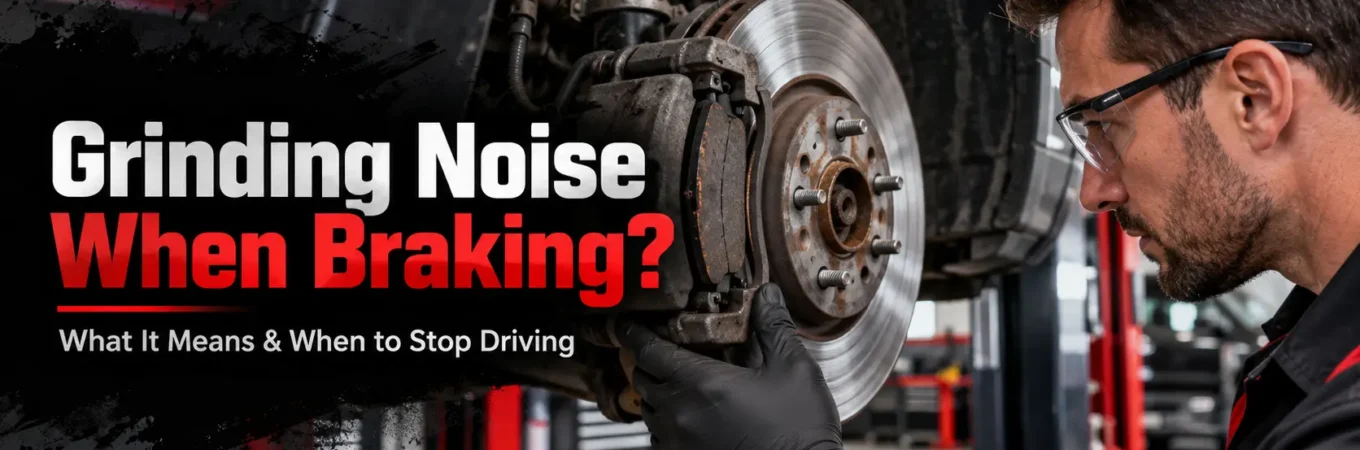
If you hear a grinding noise when braking, do not ignore it. Grinding brakes are one of the clearest warning signs that something is wrong in the brake system. In many cases, it means the brake pads are badly worn and metal may be contacting the brake rotor.
That kind of metal-on-metal brake noise can damage rotors quickly, increase repair cost, and reduce braking performance. If the grinding is loud, constant, getting worse, or paired with a soft brake pedal, pulling, vibration, burning smell, smoke, or a brake warning light, you should stop driving as soon as it is safe and arrange brake service.
For drivers in Kitchener, Waterloo, Cambridge, Guelph, and nearby areas, this is not a “wait until next week” problem. Brakes are a safety system. If your brakes are grinding, the safest next step is to have the vehicle inspected before continuing regular driving.
Quick Answer: Why Are My Brakes Grinding?
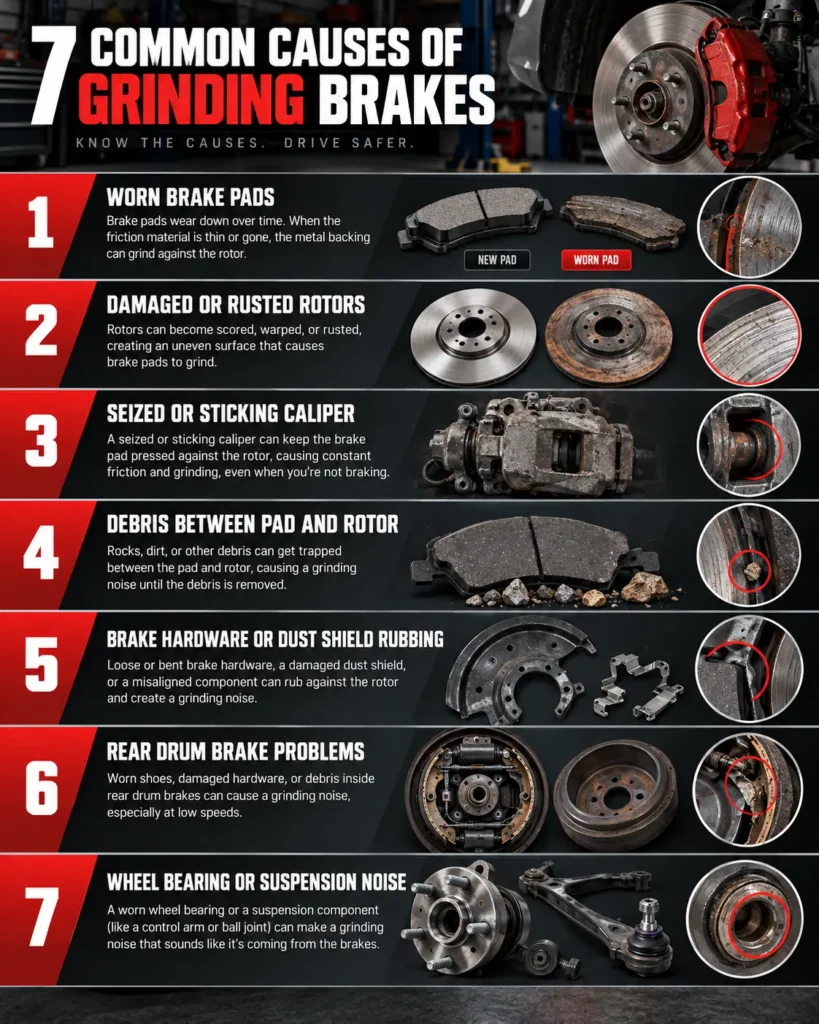
A grinding noise when braking usually means one of these problems:
- Brake pads are worn down and the metal backing plate is contacting the rotor
- Rotors are heavily rusted, scored, or damaged
- A caliper is seized or sticking
- Brake hardware is loose, broken, or rubbing
- A stone, grit, or debris is trapped between the pad and rotor
- A backing plate or dust shield is rubbing the rotor
- Rear drum brake parts are worn or damaged
- A wheel bearing or suspension issue is being mistaken for brake grinding
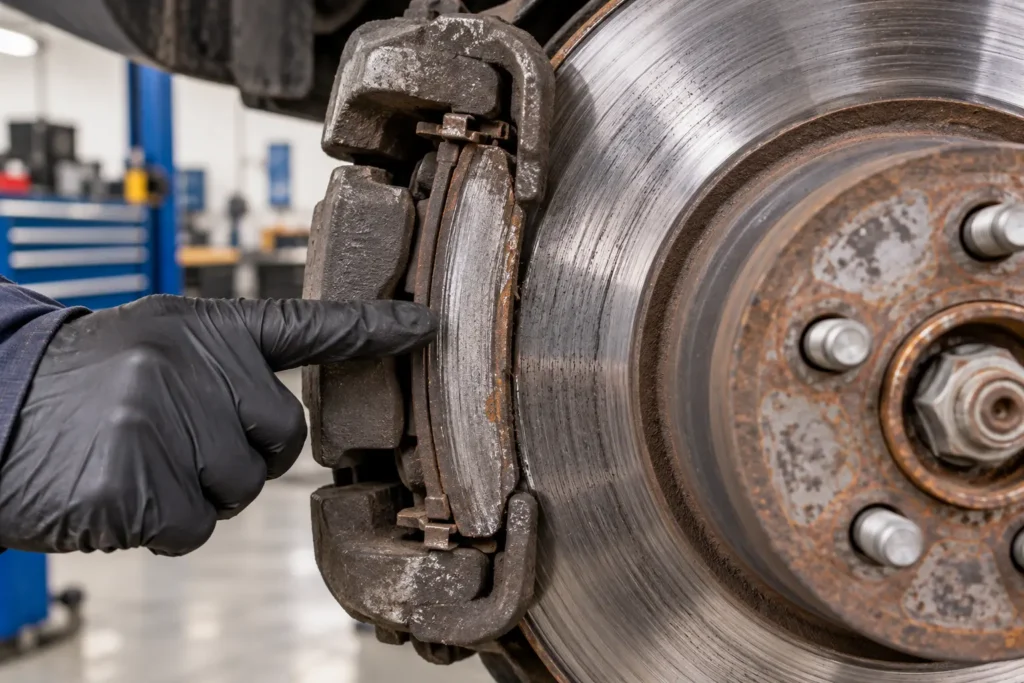
The most urgent cause is metal-on-metal brakes. This happens when the brake pad friction material is gone and the hard backing plate grinds against the rotor. Every time you press the brake pedal, the rotor can be damaged further.
If you are hearing grinding every time you brake, book a brake inspection immediately.
Should You Stop Driving If Your Brakes Are Grinding?
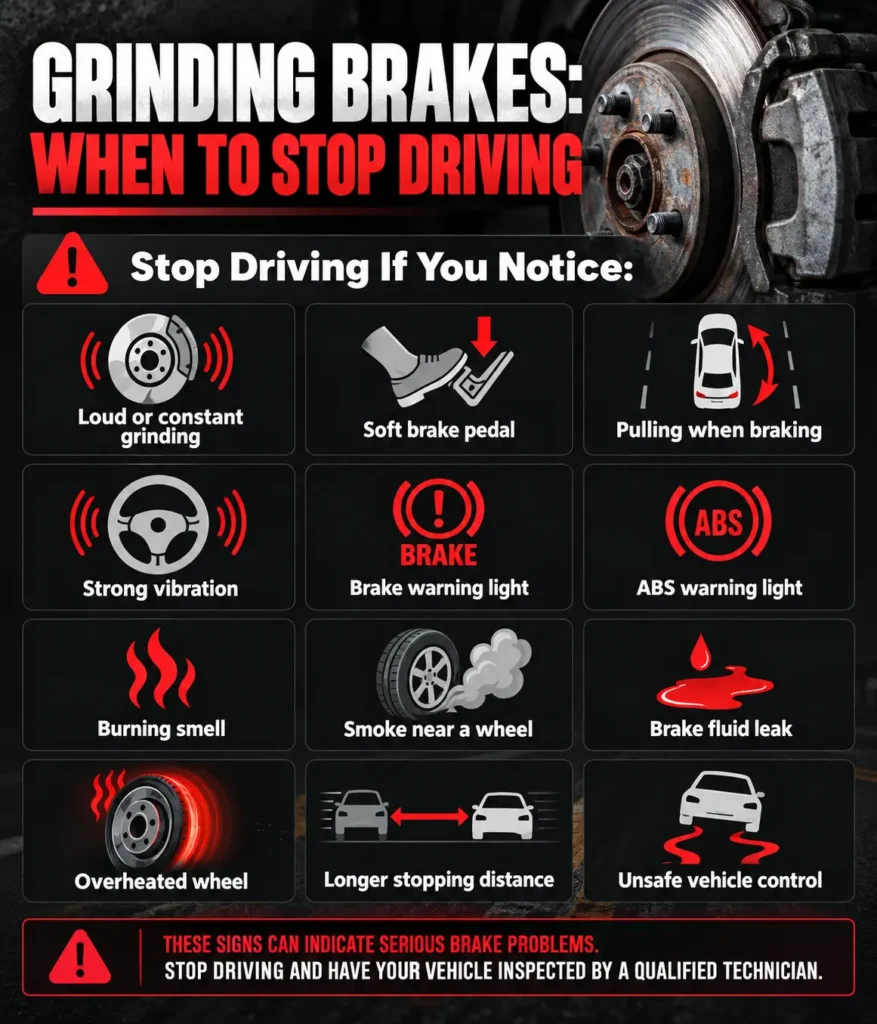
In many cases, yes. If the grinding noise is strong, repeated, or clearly happens when you press the brake pedal, you should avoid driving except to move the vehicle to a safe place or to a nearby repair shop if it is safe to do so.
Stop driving and call for help if you notice:
- Loud grinding when braking
- Grinding that gets worse quickly
- Brake pedal feels soft, spongy, or sinks too low
- Vehicle pulls to one side when braking
- Steering wheel shakes while braking
- Brake warning light is on
- ABS warning light is on
- Burning smell from a wheel
- Smoke near a wheel
- One wheel feels much hotter than the others
- Brake fluid leak
- Longer stopping distance
- Vehicle feels unsafe to control
If the vehicle does not feel safe, do not try to “make it home.” Brake failure risk is not worth it.
Why Grinding Brakes Are Urgent
Grinding brakes are urgent for two main reasons: safety and cost.
From a safety point of view, worn brakes may not stop the vehicle as effectively. The brake system may still work, but braking performance can be reduced, especially in emergency stops, wet weather, snow, traffic, or highway driving.
From a cost point of view, grinding can turn a smaller brake repair into a larger one. If the pads were replaced earlier, the rotors might still have been reusable. Once the pads grind into the rotors, the rotors often need replacement too. If the grinding continues, calipers, hardware, hoses, and other components can also be affected.
That is why it is usually cheaper to inspect brakes when they first squeal, rather than waiting until they grind.
Grinding vs Squeaking vs Squealing: What Is the Difference?
Brake noises can mean different things. Not every brake noise has the same urgency.
Squeaking
A light squeak may be caused by brake dust, moisture, light rust, pad vibration, or pad material. It can also happen after rain, snow, or when a vehicle sits overnight.
However, squeaking can also be an early sign that pads are wearing down. If it keeps happening, book an inspection.
Squealing
A high-pitched squeal can be caused by a brake pad wear indicator. Many brake pads are designed with a small metal indicator that creates noise when the pads are getting low.
This is your warning stage. At this point, you may still be able to replace pads before the rotors are damaged.
Grinding
Grinding is more serious. It often means the friction material is gone and metal is contacting metal. This can damage rotors quickly and may reduce stopping performance.
If your brakes are grinding in Kitchener traffic, on Highway 7/8, on Victoria Street, or during daily commuting, do not delay service.
Main Causes of Grinding Noise When Braking
1. Worn Brake Pads
The most common cause of grinding noise when braking is worn brake pads.
Brake pads are made with friction material that slowly wears down as you drive. When that material gets too thin, the metal backing plate can contact the brake rotor. This creates a harsh grinding or scraping sound.
Signs of worn brake pads include:
- Grinding when braking
- Squealing before grinding started
- Longer stopping distance
- Brake warning light on some vehicles
- Thin pad material visible through the wheel
- Vibration or rough braking
- Brake dust or metal particles near the wheel
If the pads are already grinding, pads-only repair may no longer be enough. The rotors may also need replacement.
2. Damaged Brake Rotors
Brake rotors are the discs that the pads clamp onto. If rotors are heavily scored, grooved, rusted, warped, cracked, or damaged, they can create grinding or scraping sounds.
Rotor damage may happen from:
- Driving too long with worn pads
- Metal-on-metal contact
- Heavy rust
- Heat damage
- Poor-quality parts
- Seized calipers
- Incorrect previous brake repair
- Long periods of sitting
Kitchener vehicles often deal with winter road salt and moisture, which can contribute to rotor corrosion. Light surface rust may clear after a few stops, but heavy rust or pitting can cause noise, vibration, and poor braking feel.
3. Seized or Sticking Caliper
A brake caliper presses the pads against the rotor. If a caliper sticks, it may keep pressure on the pad even when you are not braking. This can create grinding, overheating, dragging, burning smell, or uneven pad wear.
A seized caliper can quickly destroy new pads and rotors if the root cause is not fixed.
Warning signs include:
- Vehicle pulls to one side
- One wheel is hotter than others
- Burning smell after driving
- Grinding while driving, not only while braking
- Uneven pad wear
- Smoke near the wheel
- Reduced fuel economy
- Car feels like it is being held back
Ontario winter conditions can contribute to seized slide pins, rusted hardware, and sticking brake parts. If a caliper is sticking, replacing pads alone will not solve the problem.
4. Debris Between Pad and Rotor
Sometimes grinding is caused by a small stone, road grit, rust flake, or debris caught between the pad and rotor.
This type of noise may happen suddenly and may sound like scraping. It may come and go. However, you should not assume it is harmless unless the vehicle is inspected. Debris can damage the rotor surface or hide a more serious problem.
If the sound disappears quickly and braking feels normal, monitor it carefully. If it continues, book an inspection.
5. Brake Hardware or Dust Shield Rubbing
Brake hardware includes clips, shims, springs, brackets, and other small parts that keep the pads positioned correctly. If hardware is loose, broken, corroded, or installed incorrectly, it can rub and create noise.
A bent dust shield or backing plate can also rub against the rotor and sound like grinding.
This can happen after impact, rust, wheel service, suspension work, or previous brake repair.
6. Rear Drum Brake Problems
Some vehicles still use rear drum brakes. Grinding from rear drums may be caused by worn shoes, broken springs, damaged drums, seized adjusters, or loose internal hardware.
Drum brakes should be inspected by a technician because internal parts are not visible without disassembly.
7. Wheel Bearing or Suspension Noise Mistaken for Brake Grinding
Not every grinding sound is caused by the brakes. A worn wheel bearing, loose suspension part, tire issue, or CV axle problem can sometimes sound similar.
A wheel bearing noise may change with speed or when turning. Brake grinding usually changes when you press the brake pedal.
A proper inspection helps identify whether the noise is truly from the brake system.
Can Grinding Brakes Damage Rotors?
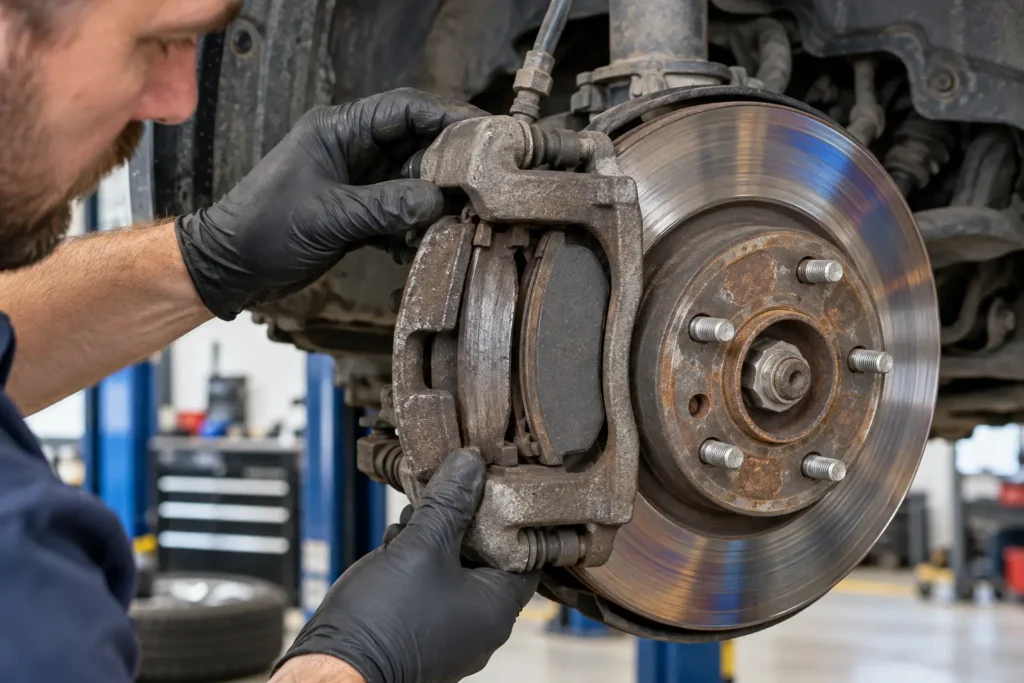
Yes. Grinding brakes can damage rotors quickly.
If the brake pad friction material is gone, the metal backing plate can cut into the rotor surface. This can create deep grooves, heat damage, uneven surfaces, and vibration.
Once the rotor is damaged or below minimum thickness, it usually cannot be reused safely. That means the repair may change from:
- Pads only
to:
- Pads and rotors
or even:
- Pads, rotors, caliper, hardware, and extra labour
This is why you should not continue driving with grinding brakes.
Can Grinding Brakes Fail an Ontario Safety Inspection?
Yes, brake problems can affect an Ontario vehicle safety inspection.
A Safety Standards Certificate inspection includes brake system requirements. If brake components are worn, unsafe, leaking, damaged, seized, below specification, or not performing properly, the vehicle may not pass.
Brake issues that can create problems during safety inspection include:
- Worn brake pads
- Damaged rotors
- Brake fluid leaks
- Corroded brake lines
- Damaged brake hoses
- Seized calipers
- Brake pull
- Parking brake problems
- Unsafe brake pedal feel
- Brake warning lights
- Poor braking performance
If you are buying, selling, registering, transferring, or preparing a vehicle for an Ontario safety inspection, grinding brakes should be repaired before inspection.
Is It Safe to Drive a Short Distance With Grinding Brakes?
There is no one-size-fits-all answer because it depends on how severe the grinding is and how the vehicle feels.
You may be able to carefully drive a very short distance to a nearby repair shop only if:
- The brake pedal still feels firm
- The vehicle stops normally
- There is no smoke
- There is no burning smell
- There is no brake fluid leak
- No brake warning light is on
- The vehicle does not pull strongly
- The grinding is not extreme
- Roads and traffic conditions are safe
Do not drive if:
- The vehicle feels unsafe
- The brake pedal is soft or sinking
- The grinding is loud or constant
- You smell burning
- You see smoke
- Stopping distance is longer
- The vehicle pulls hard
- You see fluid leaking
- Warning lights are on
If in doubt, tow the vehicle or call the shop for advice before driving.
What Will a Mechanic Check During a Grinding Brake Inspection?
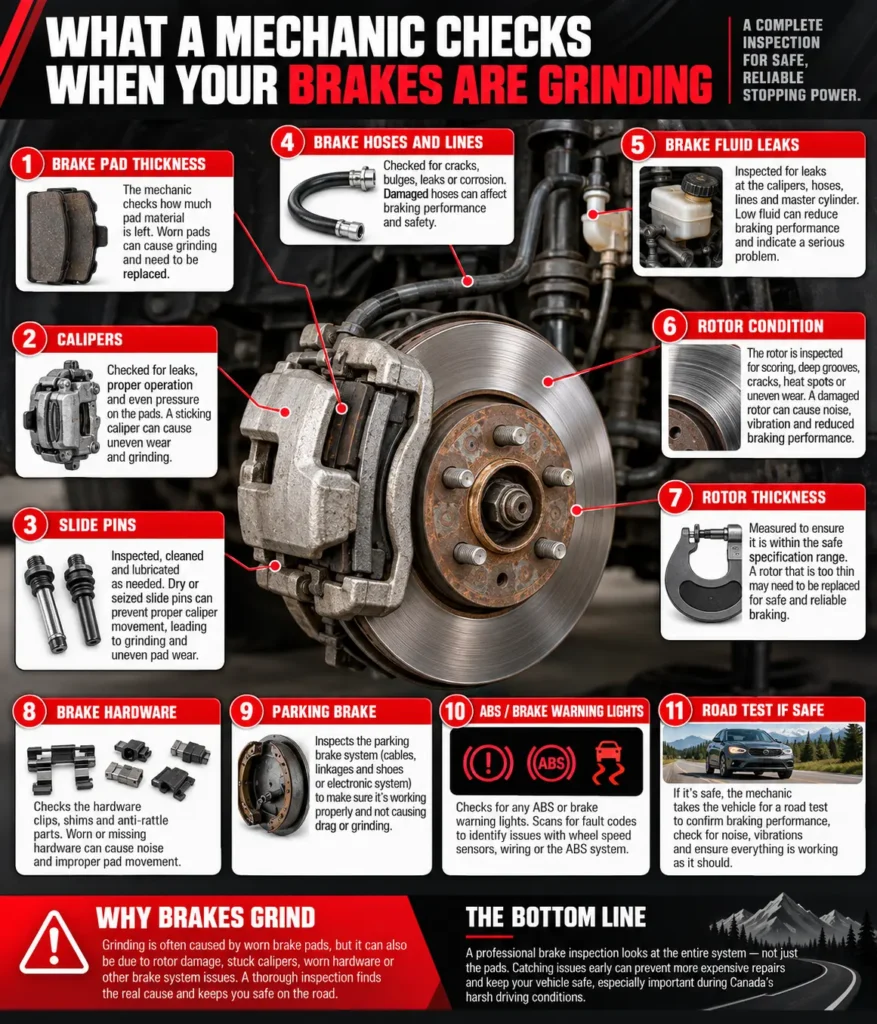
A proper brake inspection should not be guesswork. The technician should inspect the complete brake system and identify the real cause of the grinding.
At Ironix Auto, a brake inspection may include:
- Road test if safe
- Visual brake inspection
- Wheel removal where needed
- Brake pad thickness check
- Rotor condition check
- Rotor thickness measurement
- Caliper inspection
- Slide pin inspection
- Brake hose and brake line check
- Brake fluid leak check
- Parking brake check
- Brake hardware inspection
- ABS or brake warning light scan if needed
- Photos of worn or damaged parts
- Itemized quote before approved repair
This is important because grinding does not always mean the same repair. The vehicle may need pads and rotors, but it may also need a caliper, hose, hardware, brake fluid service, or additional diagnosis.
What Repairs Might Be Needed?
Pads Only
Pads-only repair may be possible if the grinding is not actually metal-on-metal and the rotors are still within specification. However, once true grinding has started, pads-only is less likely.
Pads and Rotors
This is common when worn pads have damaged the rotor or when rotors are heavily rusted, grooved, or vibrating.
Pads, Rotors, and Calipers
This may be needed if a caliper is seized, leaking, or causing uneven wear. A sticking caliper can quickly damage pads and rotors again if not repaired.
Brake Hardware
Brake clips, shims, springs, and hardware may need replacement if they are rusted, broken, loose, or causing noise.
Brake Hose or Brake Line Repair
If a hose is collapsed or a line is leaking or corroded, it must be repaired for safety.
ABS or Warning Light Diagnosis
If a brake warning light or ABS light is on, diagnostic testing may be required.
Why Kitchener Drivers Should Take Brake Grinding Seriously
Kitchener driving conditions can make brake problems worse. Local drivers deal with:
- Winter road salt
- Slush and moisture
- Stop-and-go traffic
- Potholes
- Highway driving
- Short city trips
- Cold starts
- Vehicles sitting outside in winter
These conditions can contribute to rust, seized slide pins, sticking calipers, rotor corrosion, and uneven brake wear.
If you hear grinding during winter or after the car has been parked, it may be rust-related, but it can also be worn pads. The safest approach is to have the brakes inspected.
How to Avoid Brake Grinding in the Future
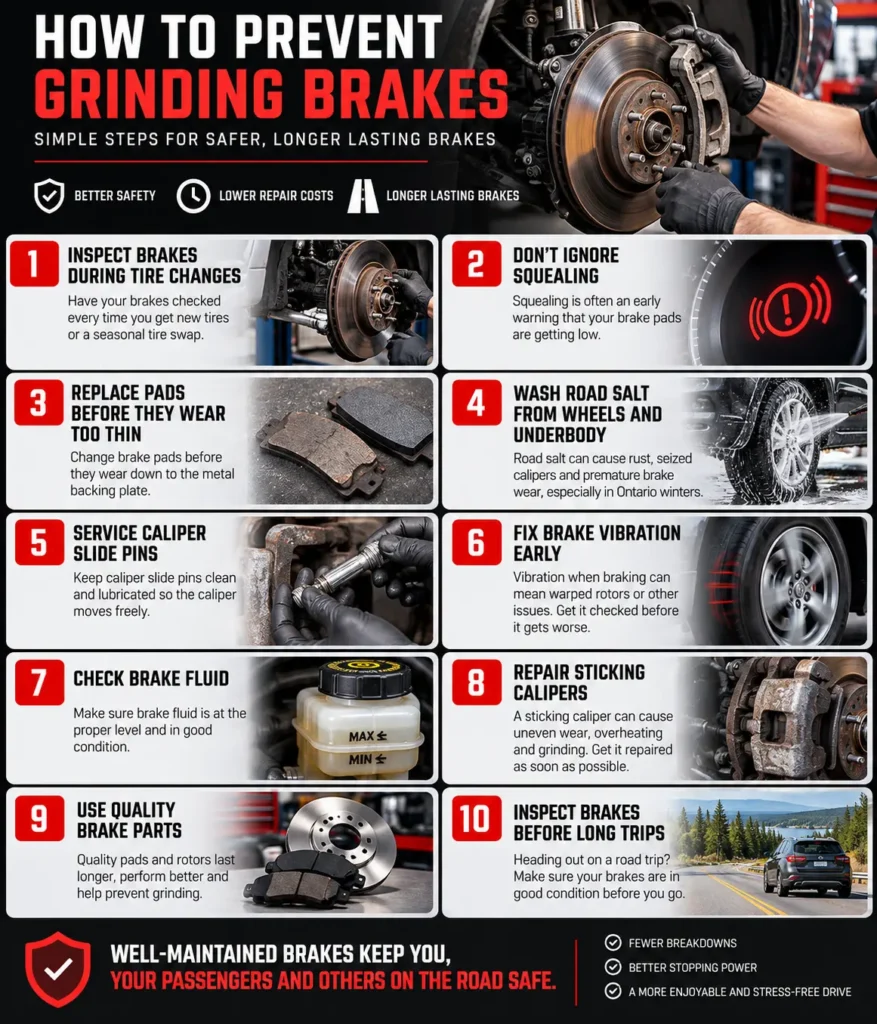
You can reduce the chance of grinding brakes by maintaining the system before it reaches the metal-on-metal stage.
Helpful habits include:
- Inspect brakes during tire changeovers
- Do not ignore squealing
- Replace pads before they are too thin
- Wash road salt from wheels and underbody
- Service caliper slide pins when needed
- Use quality brake pads and rotors
- Fix brake vibration early
- Check brake fluid condition
- Repair seized calipers quickly
- Avoid riding the brakes
- Book inspection before long trips
Many brake repairs become expensive because the early warning signs were ignored.
What Should You Do Right Now?
If you hear a grinding noise when braking, treat it as urgent.
A light squeak may be an early warning, but grinding often means the brake pads are overdue and may already be damaging the rotors. If the grinding is loud, constant, or paired with poor braking, vibration, pulling, burning smell, smoke, leaks, or warning lights, stop driving and call for brake service.
The longer you drive with grinding brakes, the more likely you are to damage rotors, calipers, and other brake components. More importantly, your stopping performance may be reduced.
If you are in Kitchener or nearby, book a brake inspection with Ironix Auto today.
Grinding brakes can damage rotors fast. Call Ironix Auto for same-day brake service.