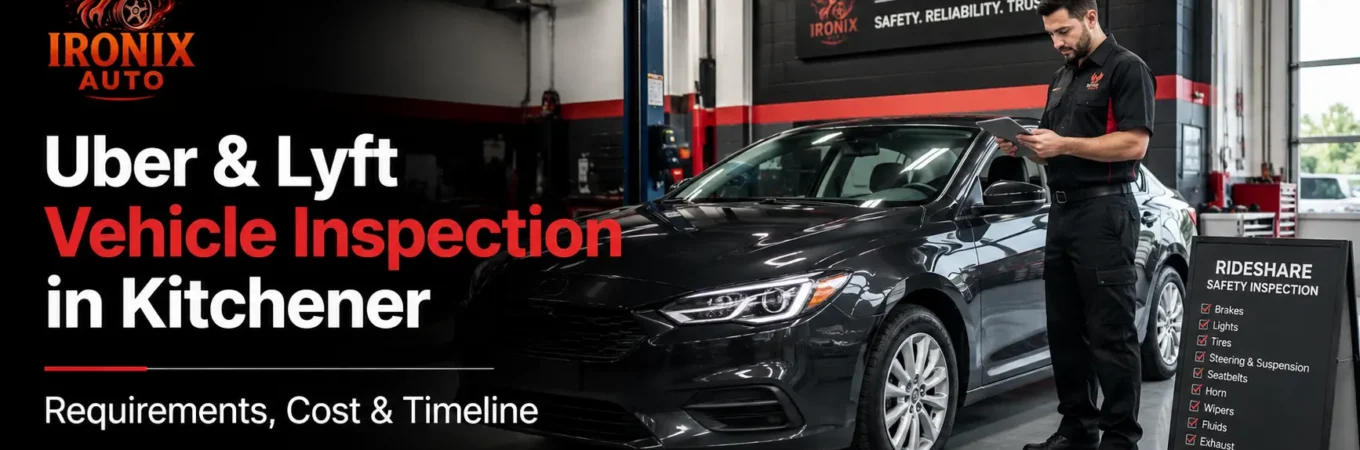
If you want to drive for Uber or Lyft in Kitchener-Waterloo, your vehicle must meet the platform’s requirements before you can start accepting rides. One of the most important steps is the vehicle inspection.
For drivers in Ontario, this usually means completing a safety inspection and receiving a Safety Standards Certificate, also known as an SSC. In Kitchener-Waterloo, Uber states that all partners must pass an annual vehicle inspection and receive a Safety Standards Certificate to drive with Uber. Lyft’s Ontario driver information also states that vehicles must pass an annual inspection and receive an SSC issued by a mechanic licensed by the Ontario Ministry of Transportation.
This guide explains the Uber and Lyft vehicle inspection requirements in Kitchener, what is checked, how much the inspection may cost, how long the process can take, and what drivers should do before uploading documents to their driver account.
If you need help locally, book your Uber or Lyft safety certificate inspection at Ironix Auto in Kitchener.
Why Uber and Lyft Require Vehicle Inspections
Rideshare vehicles carry passengers every day, often in busy city traffic, highway conditions, winter weather, and stop-and-go driving. Because of this, Uber and Lyft require drivers to meet vehicle safety standards before using the platform.
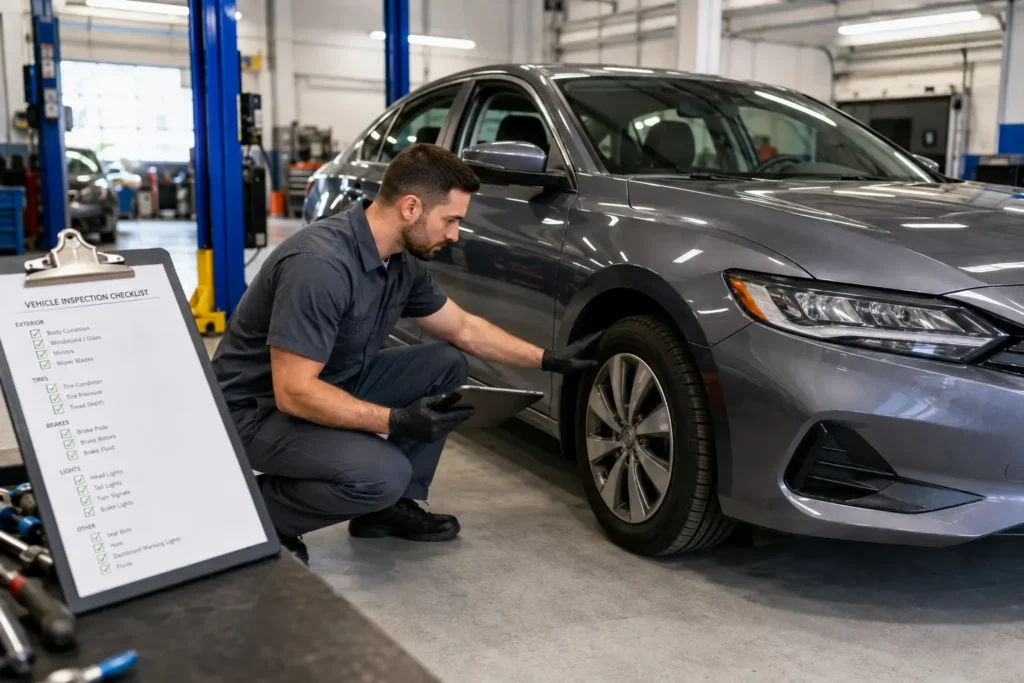
A vehicle inspection helps confirm that key safety systems are working properly. These include brakes, tires, steering, suspension, lights, windshield, wipers, seat belts, exhaust, body structure, and other safety-related components.
For Ontario drivers, the inspection is tied to the Safety Standards Certificate process. This is not just a quick visual check. It is an inspection completed according to Ontario’s vehicle safety requirements through an authorized inspection process.
A passed inspection does not mean the vehicle is new, perfect, or guaranteed to remain problem-free. It means the vehicle met the applicable minimum safety standard at the time of inspection.
Uber Vehicle Inspection Requirements in Kitchener-Waterloo
Uber’s inspection page for Kitchener-Waterloo states that all partners must pass an annual vehicle inspection and receive a Safety Standards Certificate to drive with Uber.
Uber also gives an important upload instruction: drivers should upload the document labelled “Ontario DriveON Safety Standard Certificate,” not the “Ministry of Transportation Safety Inspection Report.”
This matters because drivers may receive or see more than one document during the process. Uploading the wrong document can delay approval. If Uber asks for the Safety Standards Certificate, the inspection report alone may not be enough.
Uber’s general vehicle requirements in Canada include a 4-door vehicle, and Uber notes that the vehicle model year must be 10 years old or newer to qualify for UberX. Uber also states that requirements can vary by city, so drivers should always check the Uber Driver app or official city-specific requirement page before booking or uploading documents.
For Kitchener-Waterloo, Uber’s regulatory page also mentions that local bylaws require the Uber sticker to be displayed while driving with Uber. This is separate from the vehicle safety inspection, but it is still part of being ready to operate on the platform.
Lyft Vehicle Inspection Requirements in Ontario and Kitchener-Waterloo
Lyft’s Ontario driver information says that to drive with Lyft in Ontario, your vehicle must pass an annual inspection and receive a Safety Standards Certificate issued by a mechanic licensed by the Ontario Ministry of Transportation.
Lyft’s Ontario page also lists local and province-related driver and vehicle requirements. For Kitchener-Waterloo, Lyft states that vehicles must be 10 years or newer. Lyft also requires 4 doors, and its driver requirements page says Lyft vehicles must have a minimum of 5 seatbelts, including the driver’s seatbelt.
Lyft also mentions city-specific requirements, including Lyft ID for Kitchener-Waterloo drivers, accessible in the driver’s Waybill. Because rideshare requirements can change, drivers should always confirm the latest requirements inside the Lyft Driver app or Lyft’s official Ontario driver information page before booking an inspection.
What Is a Safety Standards Certificate?
A Safety Standards Certificate is the document that confirms a vehicle met Ontario’s minimum safety standard at the time of inspection.
In Ontario, safety inspections are completed through the DriveON program, which is the province’s digital-based program for vehicle safety and emissions inspections. Ontario states that any Vehicle Inspection Centre licensed by the Ministry of Transportation can provide a certificate by email once the vehicle passes an inspection.
For Uber and Lyft drivers, this certificate is important because it is the document the platform may require to approve or renew your vehicle.
It is important to understand the difference between the certificate and the inspection report. The report may show inspection details, but Uber specifically tells Kitchener-Waterloo drivers to upload the Ontario DriveON Safety Standard Certificate, not the Ministry of Transportation Safety Inspection Report.
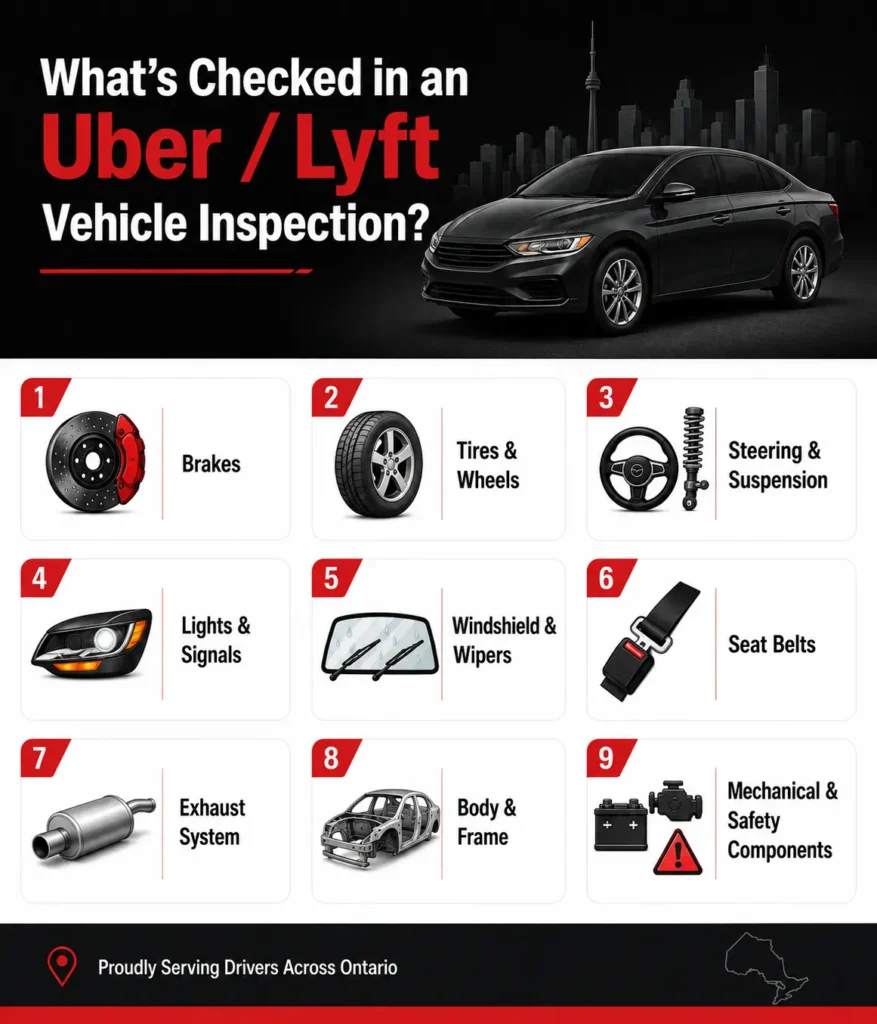
What Is Checked During an Uber or Lyft Vehicle Inspection?
In Ontario, the rideshare vehicle inspection is based on the Safety Standards Certificate process. The inspection checks whether the vehicle meets minimum safety standards at the time of inspection.
Common inspection areas include:
Brakes
The brake system is one of the most important safety areas. A technician may check brake pads, rotors, calipers, drums, shoes, brake lines, brake hoses, brake fluid leaks, parking brake operation, and braking performance.
A vehicle may fail if brake components are too worn, leaking, damaged, seized, insecure, or not operating safely.
For rideshare drivers, brakes are especially important because city driving involves frequent stops, passenger pickup and drop-off, traffic lights, and winter road conditions.
Tires and Wheels
Tires affect braking, steering, traction, and passenger safety. During inspection, the technician checks tire condition, tread, sidewall damage, wheel condition, lug nuts, and related safety concerns.
A vehicle may fail if tires are bald, damaged, cracked, mismatched improperly, leaking, or unsafe.
If you drive for Uber or Lyft, tire condition also affects comfort and rider confidence. Uneven wear may also indicate alignment, steering, or suspension problems.
Steering and Suspension
Steering and suspension systems help keep the vehicle stable and controllable. The inspection may include tie rods, ball joints, control arms, bushings, shocks, struts, steering linkage, and related components.
Common failure signs include clunking noises, loose steering, vibration, uneven tire wear, pulling to one side, or poor handling.
For rideshare vehicles, suspension condition matters because passengers notice ride comfort. A noisy or unstable vehicle can affect safety and the rider experience.
Lights and Signals
The inspection checks required lights and signals, including headlights, brake lights, turn signals, hazard lights, reverse lights, tail lights, licence plate lights, and reflectors where applicable.
Before your appointment, test your lights with another person. Simple bulb issues are often easier to fix before the inspection.
Windshield, Wipers, and Visibility
Your windshield, wipers, washer system, mirrors, and visibility-related components may be checked. A cracked windshield, worn wipers, or non-working washer system can cause problems.
This is especially important for Kitchener-Waterloo drivers because Ontario weather can include snow, ice, rain, slush, and road spray.
Seat Belts and Occupant Safety
Seat belts must work properly. A technician may check seat belt latches, retractors, mounting points, and webbing condition.
Because Uber and Lyft vehicles carry passengers, every passenger seating position should be safe and usable. Lyft also requires a minimum number of seatbelts for driver eligibility.
Exhaust System
The exhaust system may be inspected for leaks, loose parts, missing parts, unsafe routing, or insecure components. Exhaust leaks can be dangerous because fumes may enter the cabin.
If your vehicle sounds louder than normal or you smell exhaust inside the cabin, get it checked before booking a rideshare inspection.
Body, Frame, and Structure
The vehicle body and structure must be safe. Severe rust, sharp edges, loose panels, damaged structural areas, unsafe underbody condition, or poor collision repairs can affect the inspection result.
In Ontario, rust is a common concern because of winter road salt. Surface rust may not always be a failure, but structural corrosion or unsafe body condition can be a serious issue.
Mechanical, Electrical, and Safety Components
The inspection may also include fuel system components, fluid leaks, horn, dashboard warning indicators, battery security, wiring, powertrain-related safety items, and road test items where applicable.
A check engine light or other warning light does not always mean the same thing in every situation, but rideshare drivers should not ignore warning lights. If a warning light is on, get the issue diagnosed before the inspection.
How Much Does an Uber or Lyft Vehicle Inspection Cost in Kitchener?
There is no single province-wide fixed price for a Safety Standards Certificate inspection in Ontario. Inspection centres set their own pricing.
The final cost can depend on:
- The inspection centre
- Vehicle type
- Vehicle age and condition
- Whether the vehicle passes the first time
- Whether repairs are needed
- Whether re-inspection is required
- Parts and labour if the vehicle fails
The inspection fee is usually separate from repairs. If your vehicle passes, the cost may only be the inspection fee plus applicable taxes. If the vehicle fails, you will need to repair the failed items before the Safety Standards Certificate can be issued.
Common repair areas before a rideshare safety certificate include brakes, tires, lights, windshield, wipers, suspension parts, steering components, exhaust leaks, rust-related issues, seat belts, and fluid leaks.
Because prices can change and each vehicle is different, the most accurate way to know the cost is to call the inspection centre directly and ask for the current Uber/Lyft safety certificate inspection price.
Ironix Auto provides Uber and Lyft safety certificate inspections in Kitchener and can explain the current inspection cost, what is included, and what happens if repairs are needed.
How Long Does the Inspection Take?
The inspection timeline can vary depending on shop availability and vehicle condition.
A vehicle that is in good condition and passes inspection may be completed faster than a vehicle that needs repairs. If repairs are required, the timeline depends on the parts needed, technician availability, and the type of repair.
A realistic timeline may include:
Booking the Appointment
If the shop has same-day availability, you may be able to book quickly. During busy periods, you may need to schedule in advance.
Inspection Time
The inspection itself takes time because the technician must check multiple safety systems and document the inspection properly. It is not the same as a quick oil change or simple visual check.
Certificate Issuance
Ontario states that a licensed Vehicle Inspection Centre can provide a Safety Standards Certificate by email once the vehicle passes. For Uber, make sure you upload the correct DriveON Safety Standard Certificate document.
Platform Review Time
After uploading your certificate, Uber or Lyft must review the document in your driver account. Approval time is controlled by the platform, not the repair shop. If the document is unclear, expired, incomplete, or not the correct certificate, approval may be delayed.
Repair Time if the Vehicle Fails
If the vehicle does not pass, repairs must be completed before the certificate can be issued. Repair time depends on the issue. A bulb or wiper replacement may be quick, while brake, suspension, tire, exhaust, or rust-related repairs may take longer.
What Documents Should You Upload to Uber or Lyft?
For Uber in Kitchener-Waterloo, the key instruction is to upload the Ontario DriveON Safety Standard Certificate, not the Ministry of Transportation Safety Inspection Report.
For Lyft, follow the document instructions inside your Lyft Driver app or Lyft account. Lyft’s Ontario driver information states that your vehicle must pass an annual inspection and receive a Safety Standards Certificate issued by an MTO-licensed mechanic.
Before uploading, check that:
- The certificate is clear and readable
- Your vehicle information is correct
- The VIN is correct
- The date is visible
- The document is the correct certificate
- The image is not blurry
- The full document is included
- You are uploading it to the correct section of the driver app
Mistakes in document upload can delay driver approval, even if the vehicle passed inspection.
Common Reasons Uber and Lyft Vehicles Fail Inspection
Rideshare vehicles often get high mileage because they are used regularly. This can make certain repairs more common.
Common failure reasons include:
- Worn brake pads or rotors
- Leaking brake lines
- Unsafe tires
- Cracked windshield
- Worn wiper blades
- Broken lights or signals
- Loose suspension components
- Steering play or worn tie rods
- Exhaust leaks
- Severe rust or unsafe body condition
- Seat belt issues
- Dashboard warning lights related to safety systems
- Fluid leaks
- Horn not working
- Battery not secured
- Poor wheel condition
Many of these issues can be checked before your appointment. Doing a basic pre-check can reduce the chance of a failed inspection.
How to Prepare Before Your Uber or Lyft Inspection
Before booking your appointment, take a few minutes to check the vehicle.
Check All Lights
Test headlights, high beams, brake lights, turn signals, hazard lights, reverse lights, and licence plate lights.
Inspect Tires
Look for low tread, cracks, bulges, uneven wear, or visible damage. If the tires are worn or damaged, replace them before the inspection.
Check the Windshield and Wipers
Replace worn wiper blades and check washer spray. Look for cracks or chips that may affect visibility.
Listen for Brake or Suspension Noise
Grinding brakes, squealing, clunking over bumps, steering vibration, or pulling to one side should be checked before inspection.
Check Seat Belts
Test each seat belt. Make sure each one latches, releases, retracts, and is not frayed or damaged.
Look for Leaks
Check under the vehicle after parking. Oil, coolant, brake fluid, transmission fluid, or fuel leaks may need attention.
Clean the Vehicle
A clean vehicle is easier to inspect and presents better for rideshare use. Remove clutter from the interior and trunk, especially around seat belts and passenger areas.
Check Your App Requirements
Before your appointment, open your Uber or Lyft Driver app and confirm the latest document requirements, vehicle year requirements, and upload instructions.
Uber vs. Lyft Inspection: Is It the Same Certificate?
In Ontario, both Uber and Lyft refer to the Safety Standards Certificate requirement for vehicle inspection. However, each platform has its own document upload process and approval rules.
The same Ontario Safety Standards Certificate may be useful for both platforms if it meets the platform’s requirements and is accepted by each app. However, drivers should not assume automatic approval. Always check the current instructions in both Uber and Lyft driver accounts before uploading.
If you drive for both platforms, tell the inspection centre that you need the certificate for Uber and Lyft. They can help ensure you receive the correct DriveON Safety Standard Certificate document after the vehicle passes.
Can a New Car Still Need an Inspection?
Yes, platform rules may still require an inspection even if the vehicle is newer. Uber and Lyft requirements are not only based on whether the vehicle seems new or well-maintained. They require drivers to follow platform and local requirements.
If the app requests a current Safety Standards Certificate, you need to provide the required document.
Is a Rideshare Inspection the Same as a Full Pre-Purchase Inspection?
No. A rideshare safety inspection is focused on safety certificate requirements. It checks whether the vehicle meets the applicable safety standard at the time of inspection.
A full pre-purchase inspection or diagnostic inspection may go further by checking engine health, transmission condition, maintenance history, diagnostic trouble codes, fluid condition, previous accident signs, and future repair risks.
If you are buying a used vehicle specifically for Uber or Lyft, consider getting a pre-purchase inspection before buying it. A vehicle may look suitable but fail rideshare requirements because of age, condition, safety issues, title concerns, or platform restrictions.
Where to Get an Uber or Lyft Vehicle Inspection in Kitchener
Ironix Auto provides Uber and Lyft vehicle safety certificate inspections in Kitchener. The shop follows Ontario DriveON inspection standards and helps drivers understand what is required before uploading documents to the rideshare platforms.
Ironix Auto is located at:
Ironix Auto
1659 Victoria St N Unit 3
Kitchener, ON N2B 3E6
Phone: +1 519-744-8000
If you are preparing to drive with Uber or Lyft in Kitchener-Waterloo, book your inspection before your document deadline. This gives you time to complete repairs if needed and avoid platform approval delays.
Final Thoughts
Uber and Lyft vehicle inspections in Kitchener are important because they help confirm that vehicles used for rideshare service meet required safety standards.
For Uber in Kitchener-Waterloo, drivers must complete an annual vehicle inspection and receive a Safety Standards Certificate. Uber also instructs drivers to upload the Ontario DriveON Safety Standard Certificate, not the inspection report. Lyft’s Ontario driver information also requires an annual inspection and Safety Standards Certificate issued by an MTO-licensed mechanic.
The cost is not fixed across Ontario because inspection centres set their own pricing. The final amount depends on the inspection fee and whether any repairs are needed before the certificate can be issued.
The timeline depends on appointment availability, inspection result, repairs if needed, certificate issuance, and Uber or Lyft document approval.
Need an Uber or Lyft vehicle inspection in Kitchener?
Book your Uber/Lyft safety certificate inspection at Ironix Auto today.